


For the Hebrew version of this article
“Burmese food is nothing like Thai, Indian or Chinese. Lower your expectations.” Rafi implored us before going to our trip to Myanmar, or the more familiar old name, Burma. “But if there is someone I trust to enjoy Burmese food, it’s you.” With these daunting words, we went on an adventure in a country we have never seen similar in the world. A difficult and depressing country but in the same breath, warm and engaging place. The Burmese, who owned a glorious Buddhist royalty empire in the 10th-13th centuries, then suffered from long oppression of military rule and isolation from the world for centuries. From one of the richest countries in East Asia, Myanmar has become a dark isolated place with violent and corrupted rulers.
Interesting to see how the Burmese cuisine is so significantly affected by the rule. When walking around Bagan, the first capital of the Burmese empire, one can imagine a magnificent ancient world, rich and progressive which was there before. Extensive areas crammed with thousands of temples and pagodas boast with groundbreaking architecture, fine stone work and a huge variety of unique structures. The stone buildings have survived, some almost perfectly, standing as a reminder of the kingdom which was there a thousand years ago. But there is no remains of the Royal kitchen. Recipes, cooking, cooks and the kings meals are all erased with time. Burmese people were broken to many separate nations and for hundreds of years of oppression the Burmese cuisine that we want to know slowly disappeared. Today one can find only the food of poor people, farmers, those who unwillingly have become almost vegetarian and have to be satisfied with little, with what they can in order to survive.
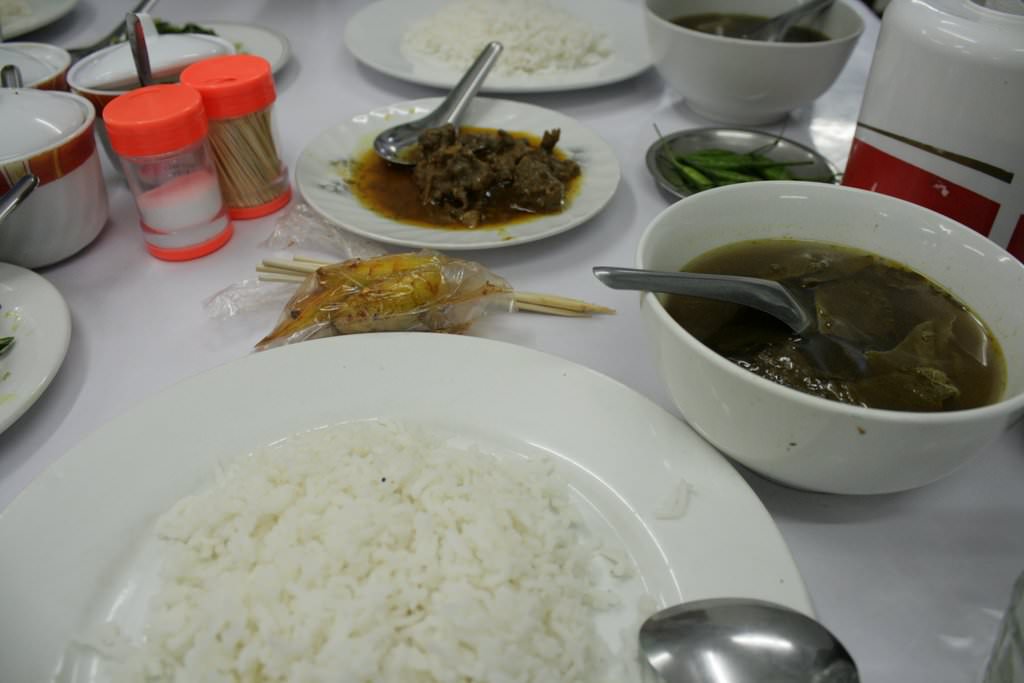
My parents, brother and I have traveled in Myanmar for fourteen days during which we explored in depth the culinary subject. By all accounts – it was too long. But long enough time to get a real feeling of the essence of Burmese cuisine as it is today. If I had to choose one picture to describe what Burmese food is, it would be this one:
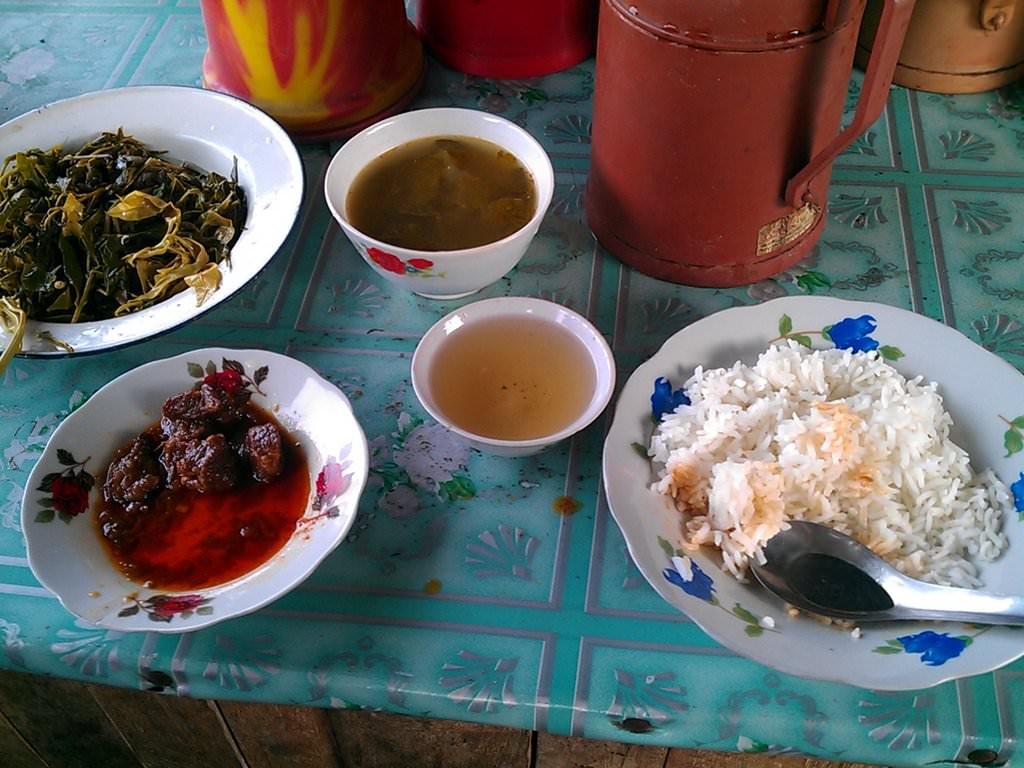
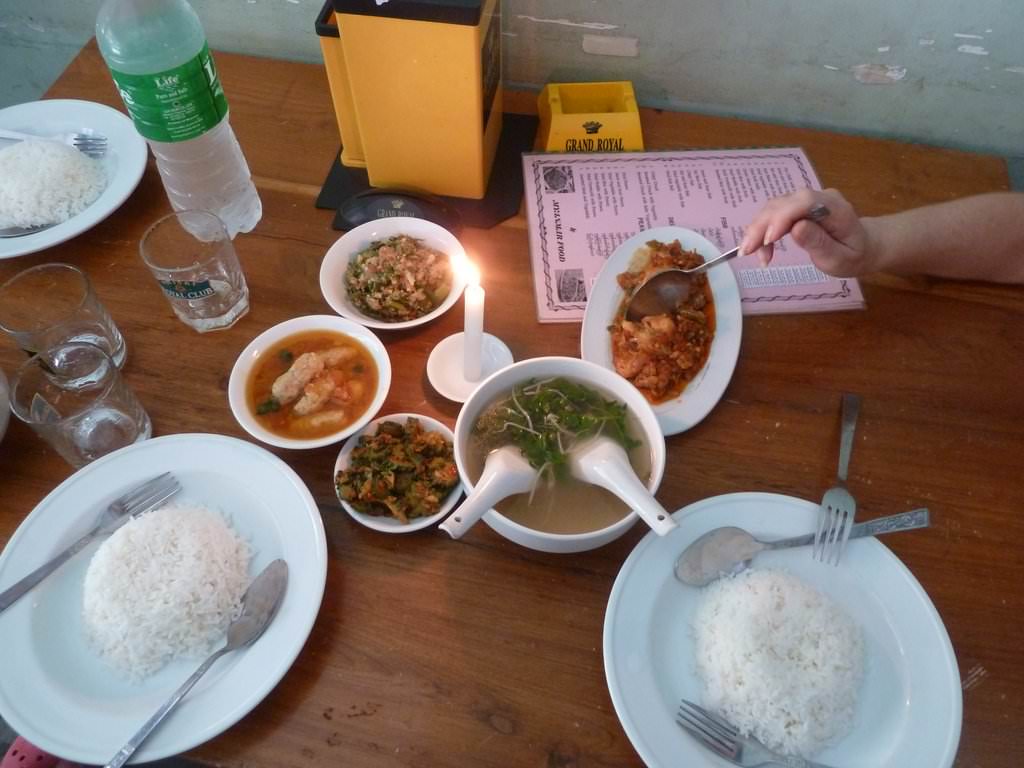
- A large plate of steamed white rice, a small plate with a few pieces of meat / chicken / fish, oily and salty curry, pickled tea leaves (and sometimes pickled eggplant or cucumbers), a small bowl of broth with vegetables and a cup of tea. Such a meal in different variations costs around 900 kyat (about 1 USD).
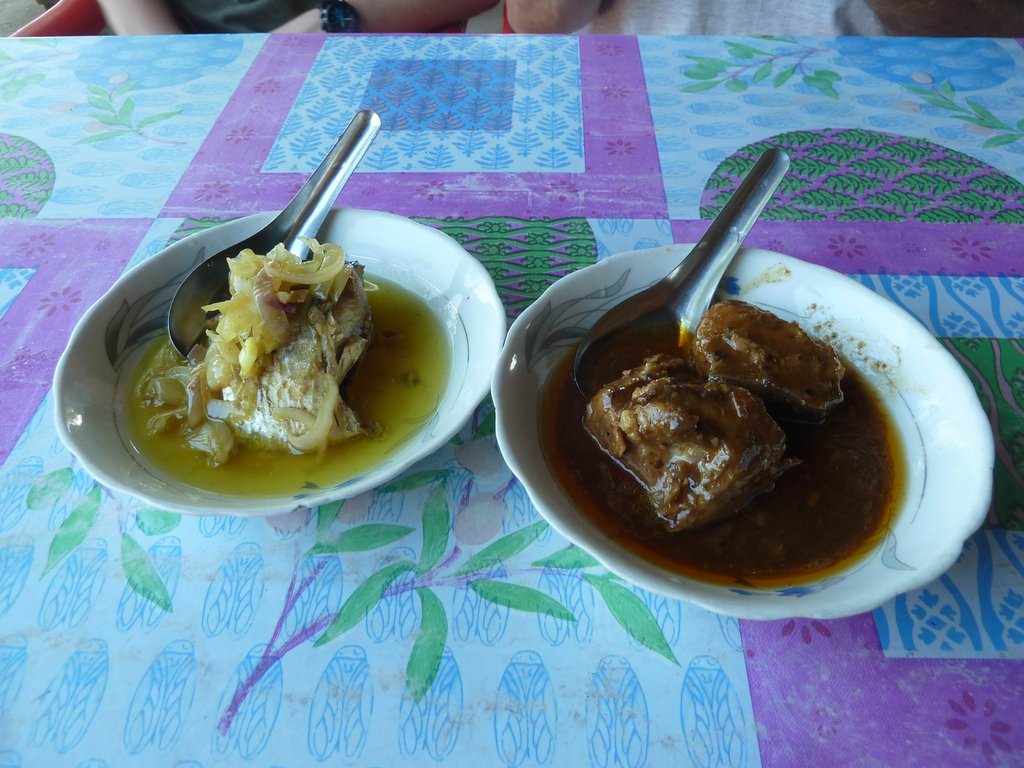
The selection of curry (not at all like an Indian or Thai curry) ranges from 2 different pots and up to a wide selection of more than ten kinds of meat, lamb, chicken and different types of fish. The dishes are heavily spiced, contain a considerable amount of oil and salt and served in small amounts. The aim is that even a small amount mixed with a large plate of rice will give it its taste as if eating a big meal.
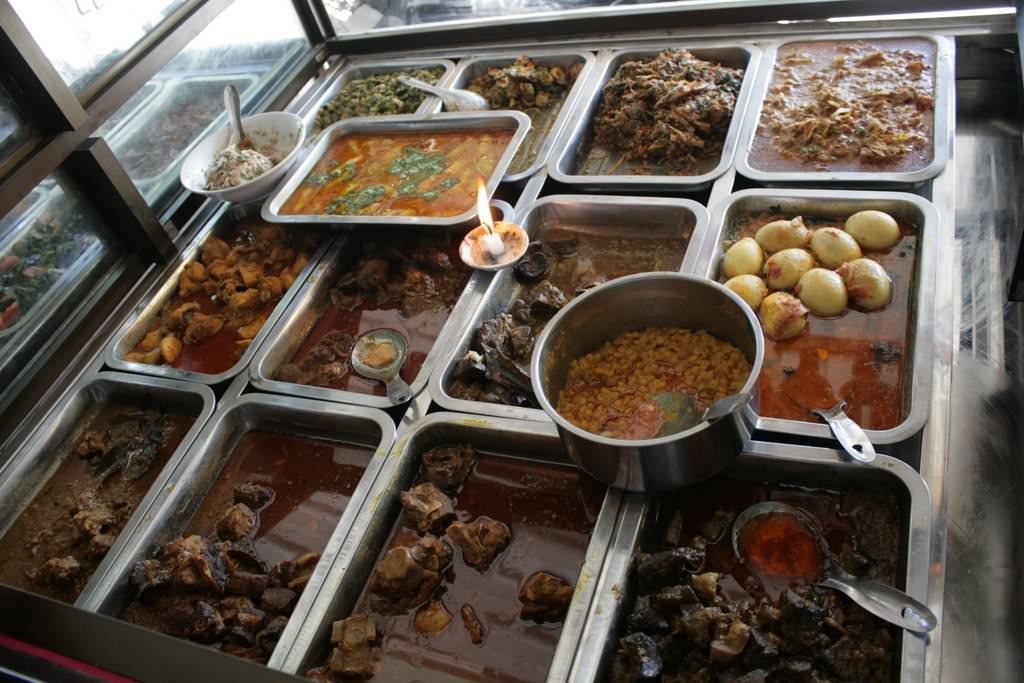
- Selection of Burmese curries in a restaurant
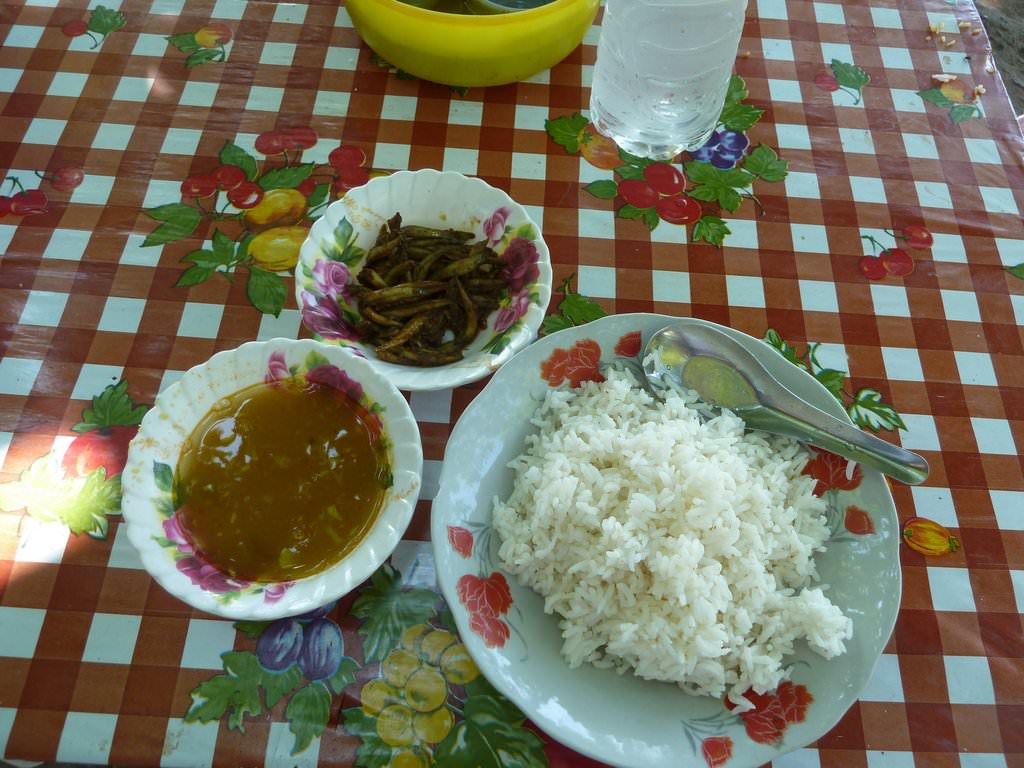
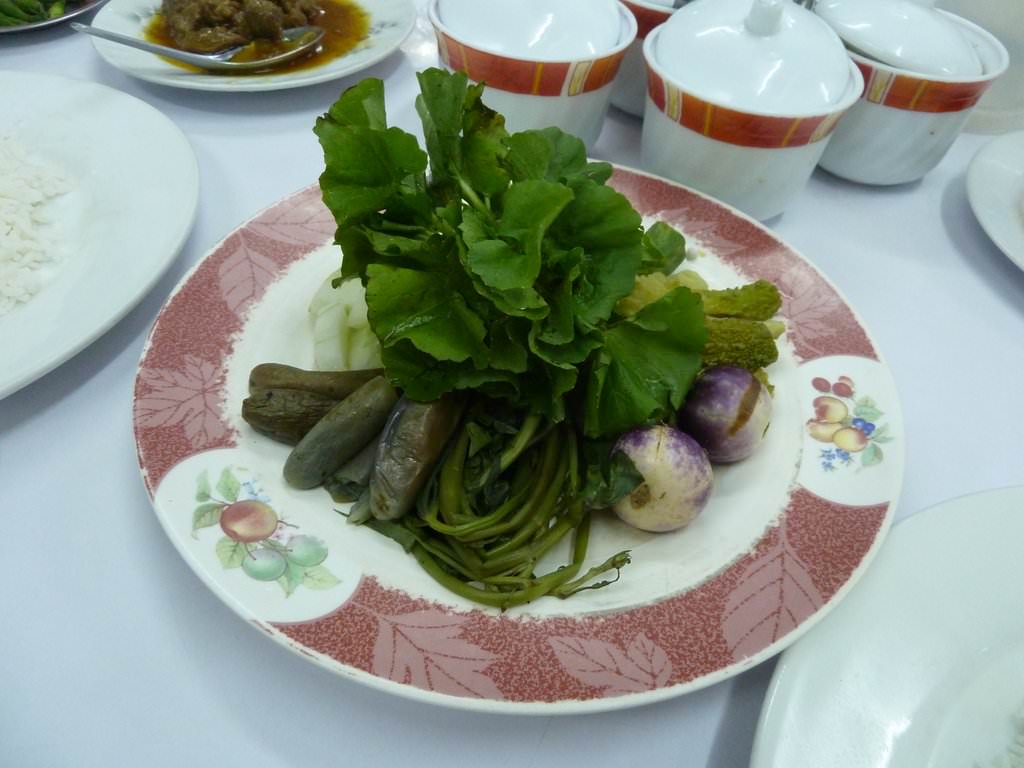
This is essentially Burmese food. One can get the same thing more or less at a street stall, market or a restaurant. The difference will not be flavor-wise but rather focused on the height of the stools and amount of illumination. The quality of the place can be identified by the quality of the soup. If the soup is rich and tasty, you got it! Sometimes I felt aftertaste with each bite which disturbed some of us but wasn’t noticeable at all for others. Pickled tea leaves are one of the most unique features of the cuisine. The eater collects these pickles with his fingers and takes it to his rice plate often together with spicy dry chili from another small dish. We found that it’s better to take the fish curry: usually a better dish, but this law also has its exceptions.
Morning time
For breakfast Burmese eat Mohinga. It’s a rich fish soup with rice noodles, lime, turmeric, ginger, onion and chili. Sometimes they add small pieces of deep fried dough that absorbs the soup and gives a pleasant texture.
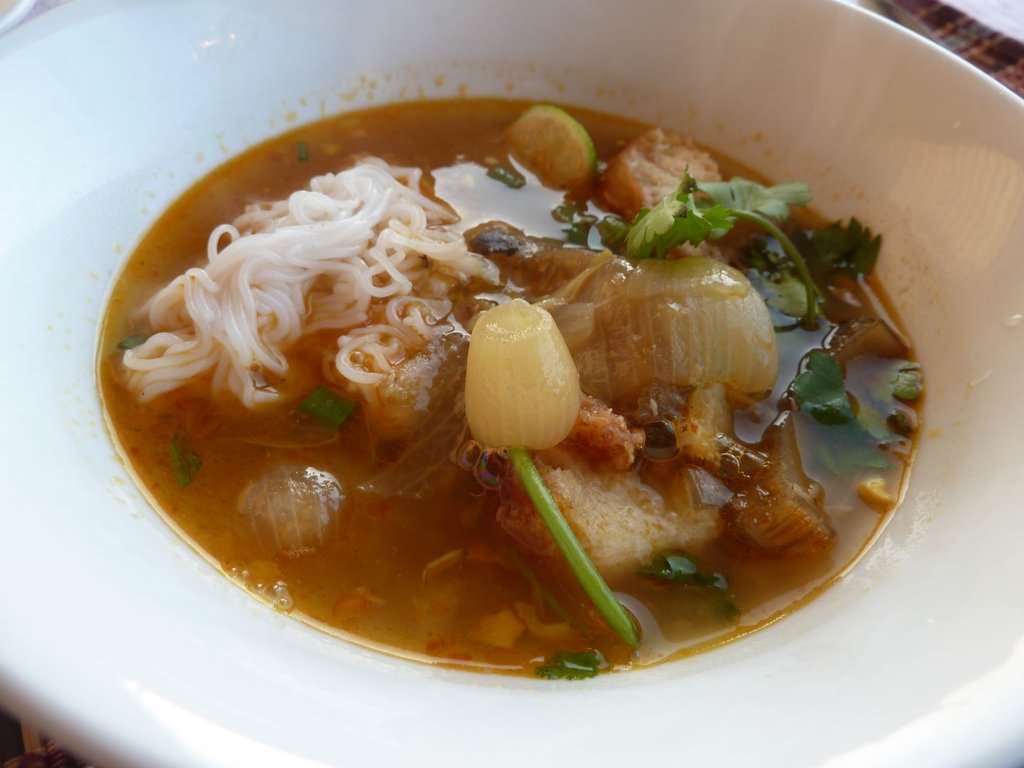
- Mohinga, Bormese breakfast
The Shan Kitchen
In the Shan state which consists most of the center of the country, you can find unique dishes of the area. Famous and most popular dishes are the “Shan salad” and the “Shan soup”. The names can be confusing because these two dishes are actually both “Shan Noodles”, noodles cooked and mixed with a variety of powders, spices and sauces. The salad is then given a decent mix and the Shan soup get a large dose of pork broth. Basically a very inexpensive dish (less than 1 USD), but the addition of some chicken or another protein will triple the price.
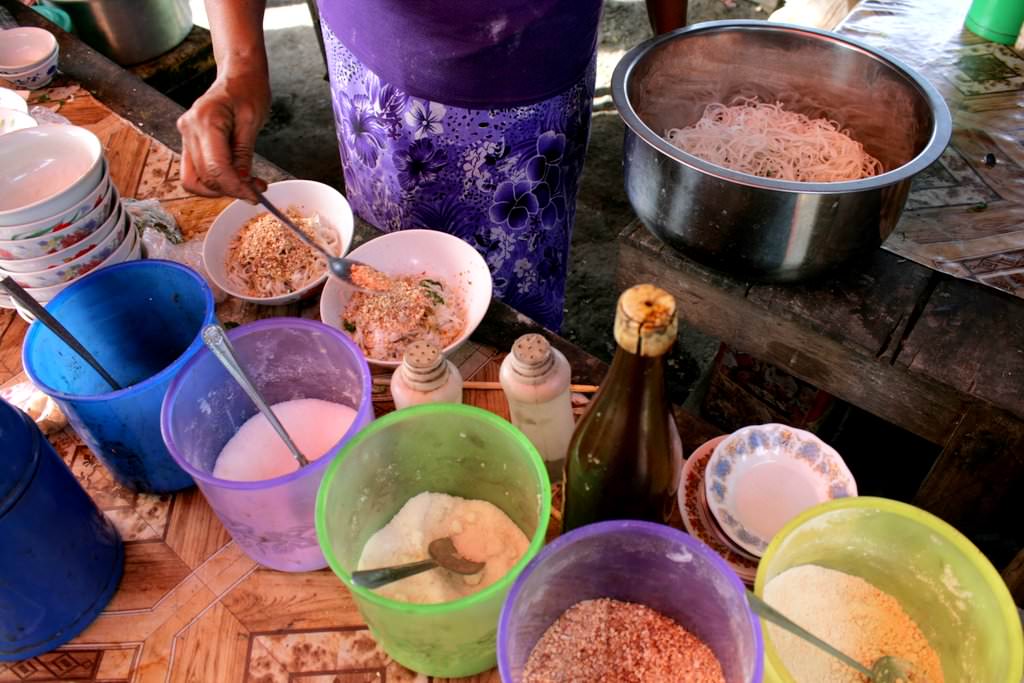
- At the beginning of their life, the Shan salad and soup are made exactly the same way. Rice noodles cooked in boiling pork broth, adding some salt, chopped peanuts, roasted chickpeas powder, sugar, garlic, fish sauce, soy sauce, fish or shrimp paste, scallions, chili and ginger
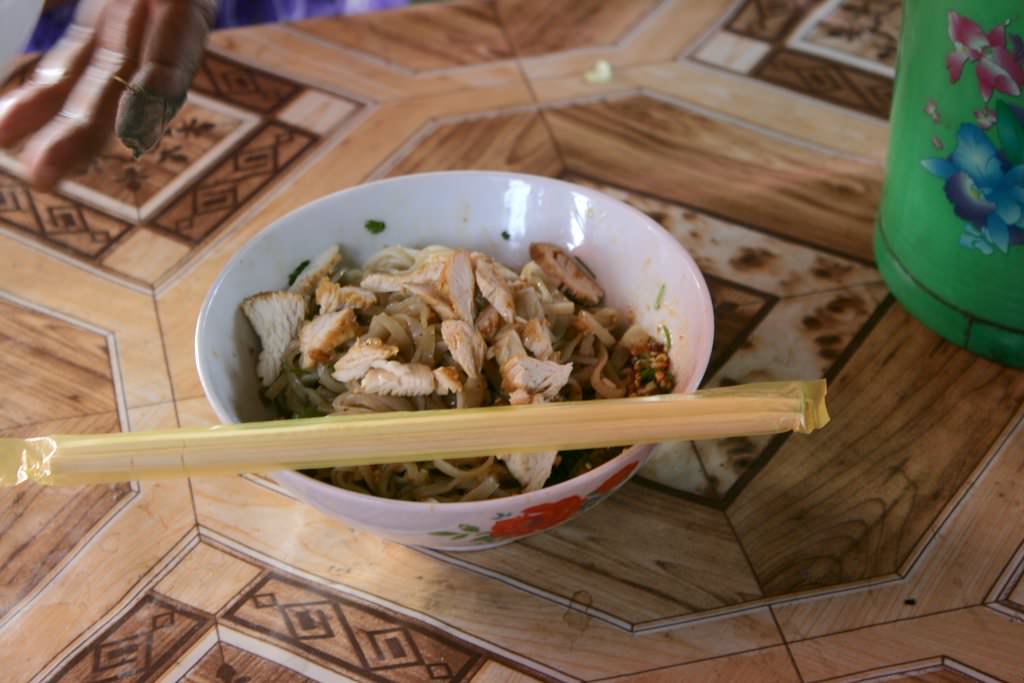
- The Shan salad ingredients are well mixed, sometimes added some chopped chicken or pork
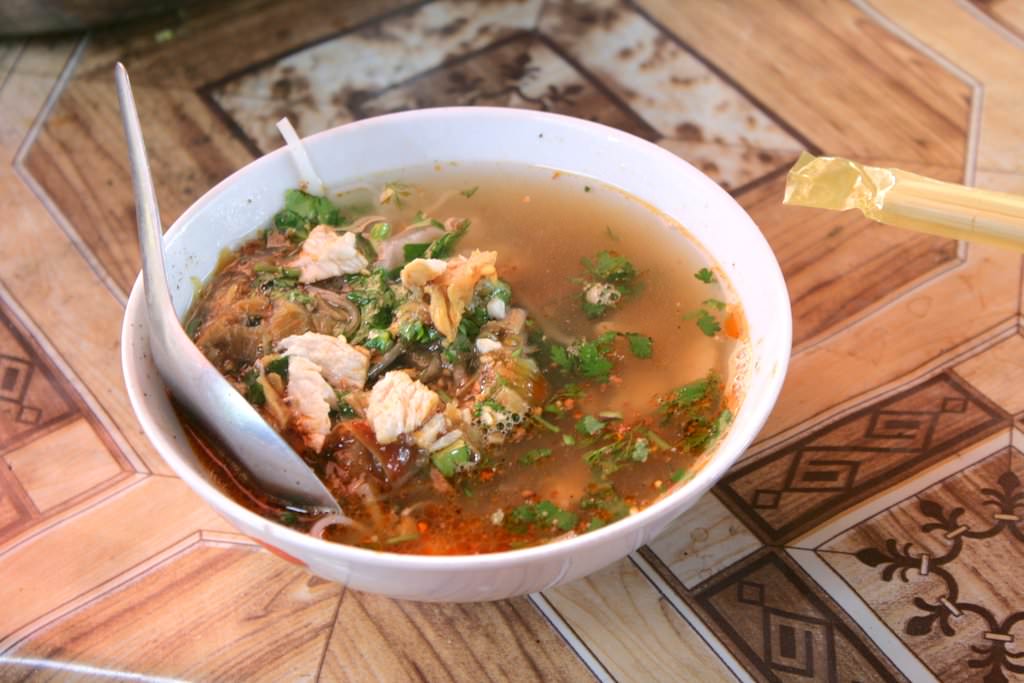
- The Shan soup is given a ladel full of pork broth and some chopped chicken or pork
Fish when there isn’t one
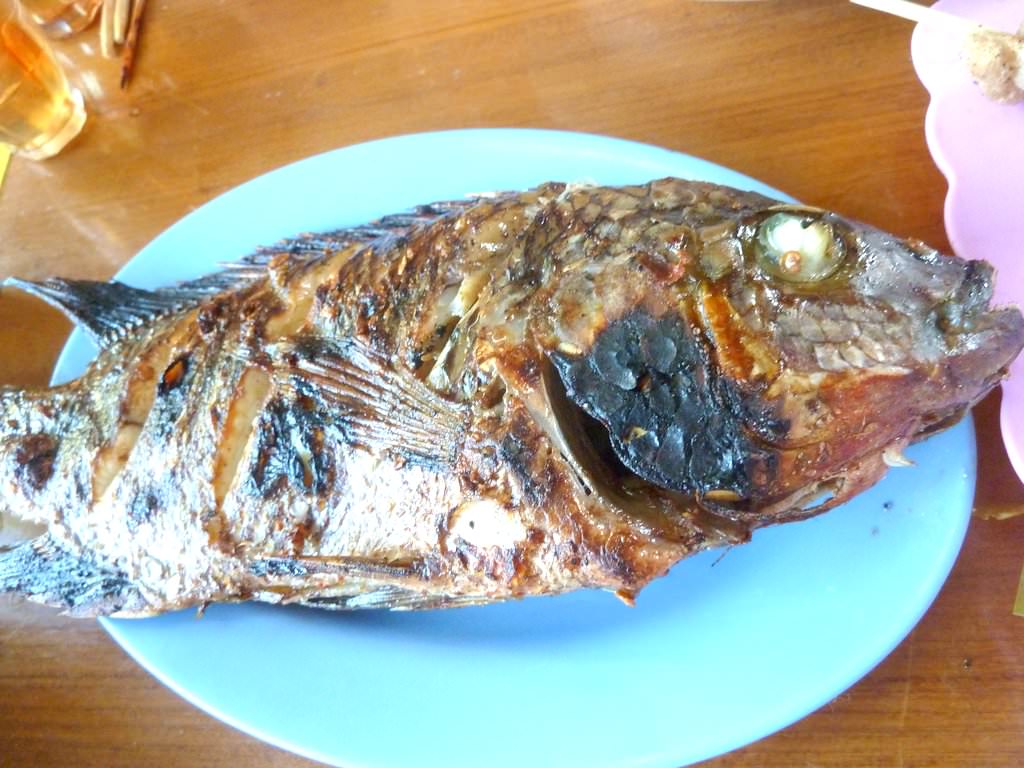
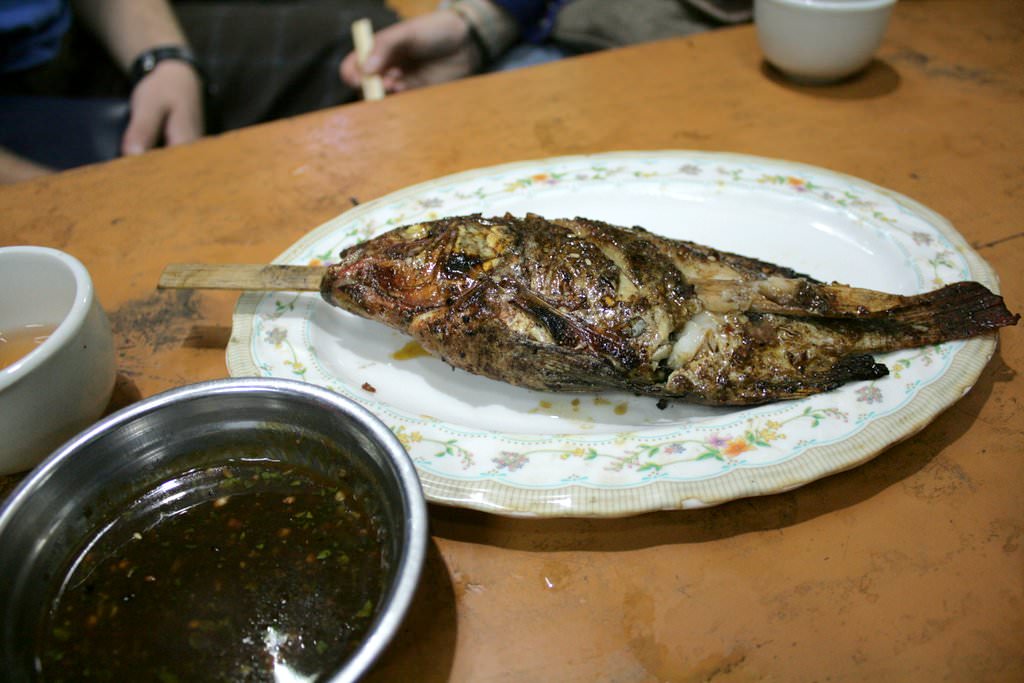
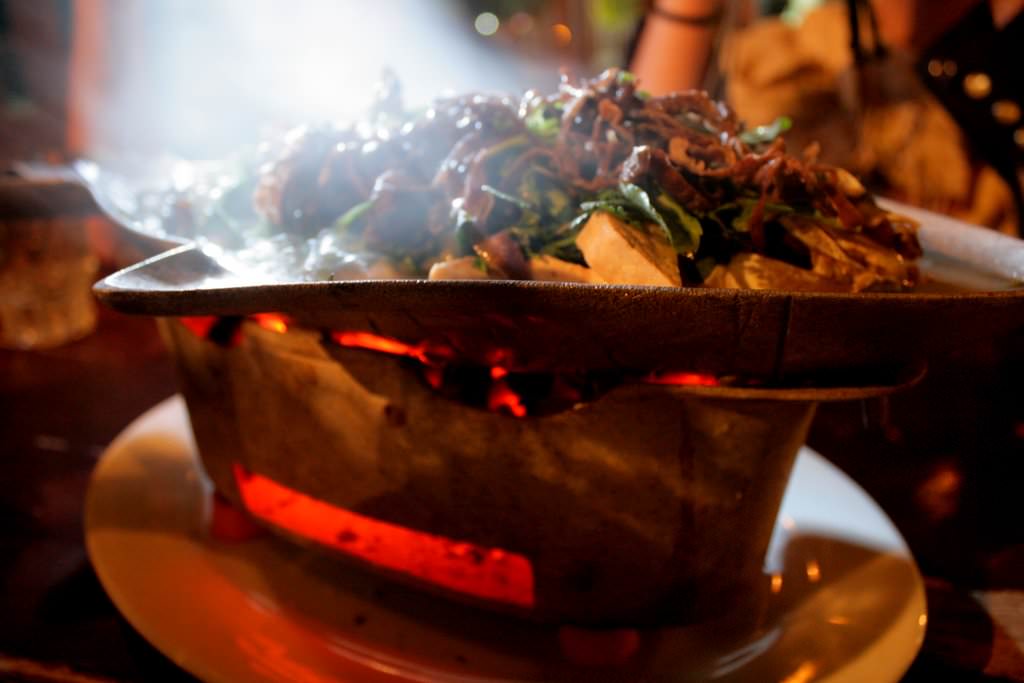
Because we felt the lack of protein, we found that the best way to get a real dose of protein rather than the normal miniature dish is to go to places that serve whole fish, steamed or grilled. The fish is usually relatively small but fresh and delicious. This really saved us, these two weeks, from being on the edge of vegetarianism. Even in restaurants with no apparent fish on the menu, one can simply ask for this steamed fish. Many places were very pleased to make this dish for us, intended actually as the staff meal: steamed fish with vegetables, spices and fish stock. On one of these restaurants where we enjoyed having the steamed fish we asked why this wasn’t on the menu. The waiter admitted that this is also his favorite dish and he doesn’t know why. Somewhere else the fish was the most excellent dish we tasted in Myanmar: a large whole fish arrived at our table on a portable charcoal grill over a ceramic plate in the form of a fish with vegetables, herbs, chunks of tofu, crispy onions and a huge bowl of exquisite fish stock that we had to pour on top so that the fish won’t get dry. A real pleasure.
City feels like a vilage
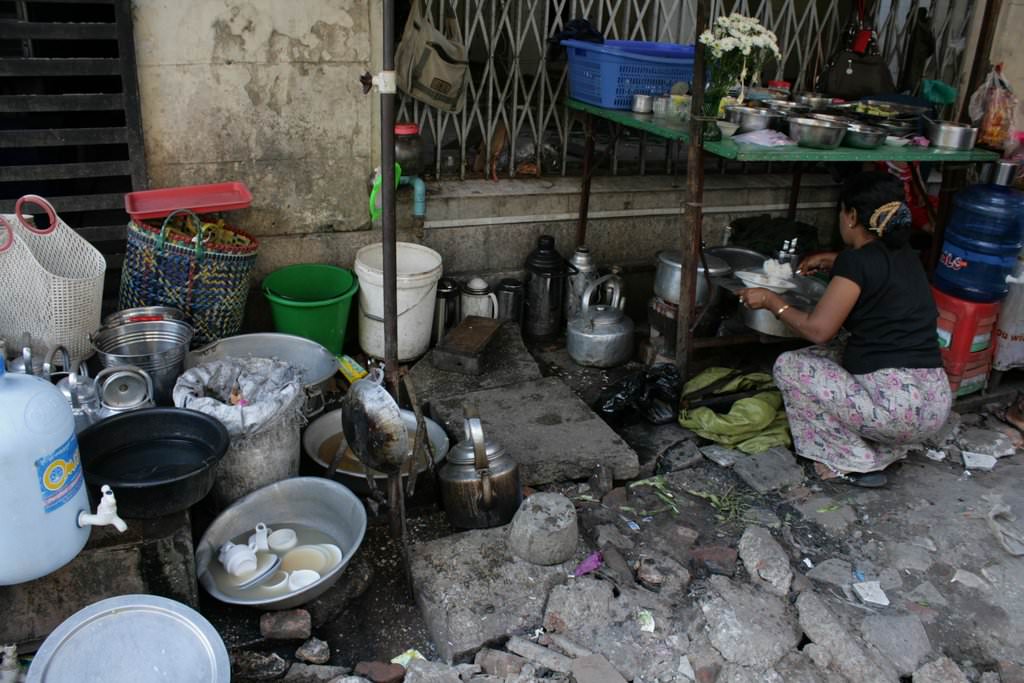
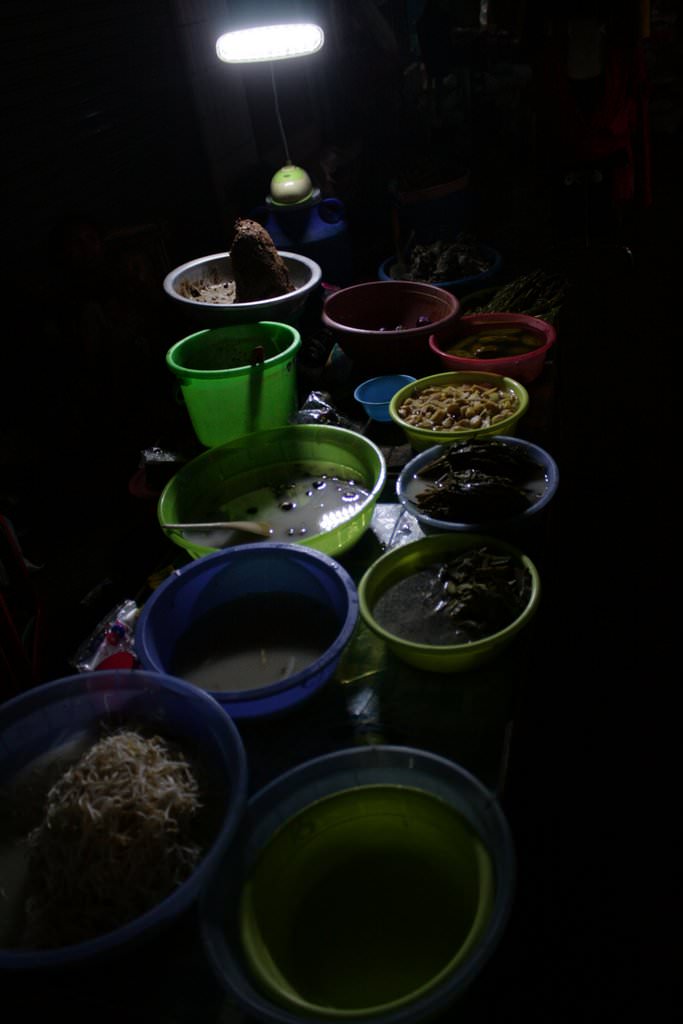
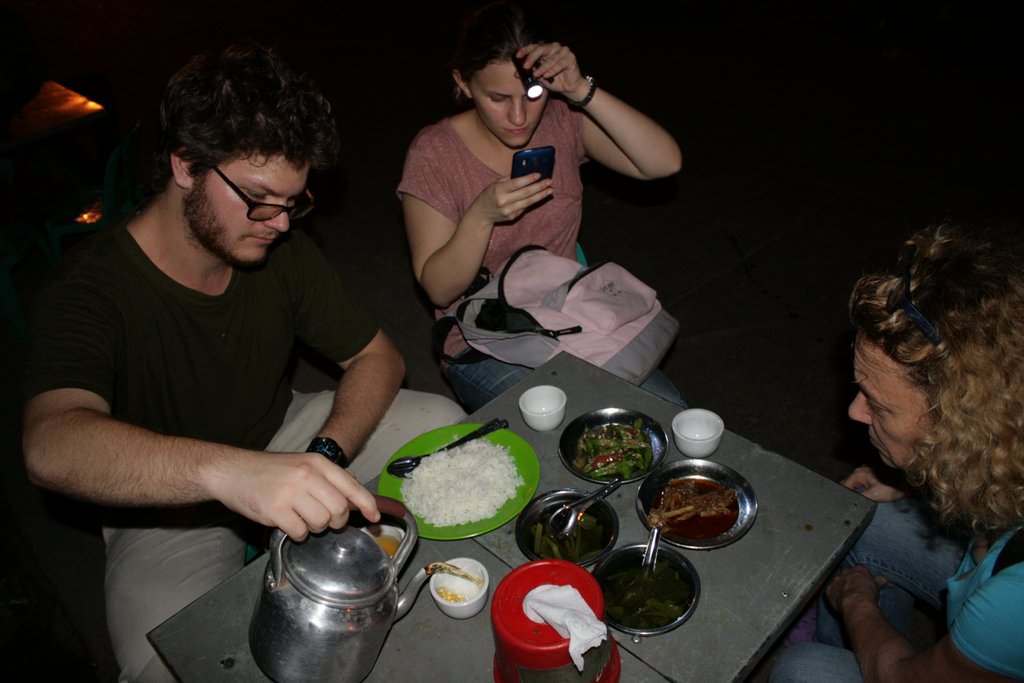
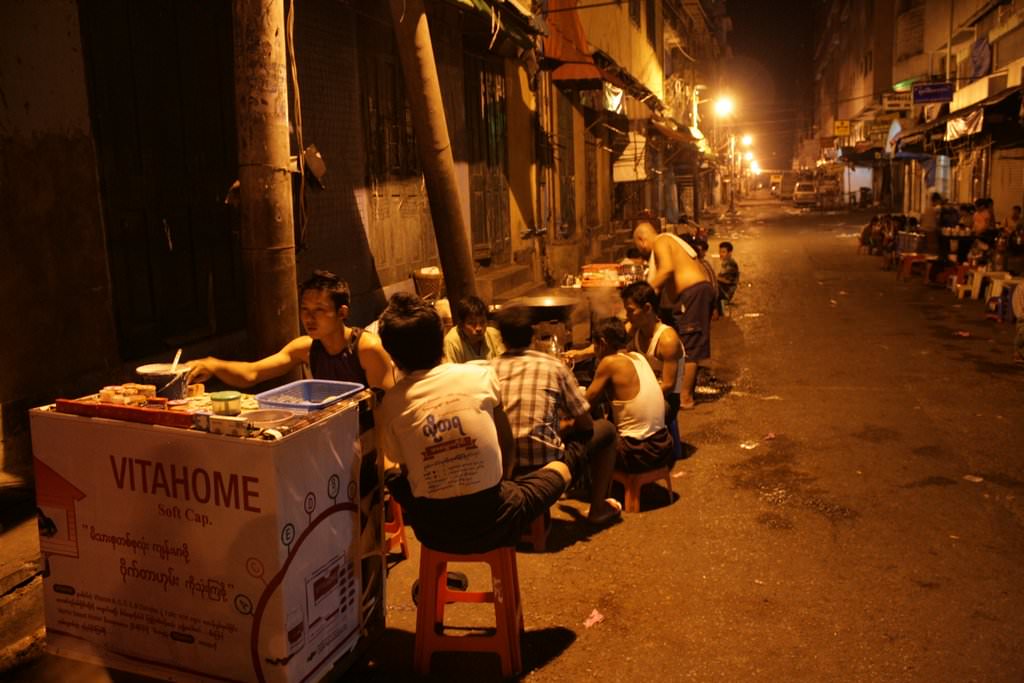
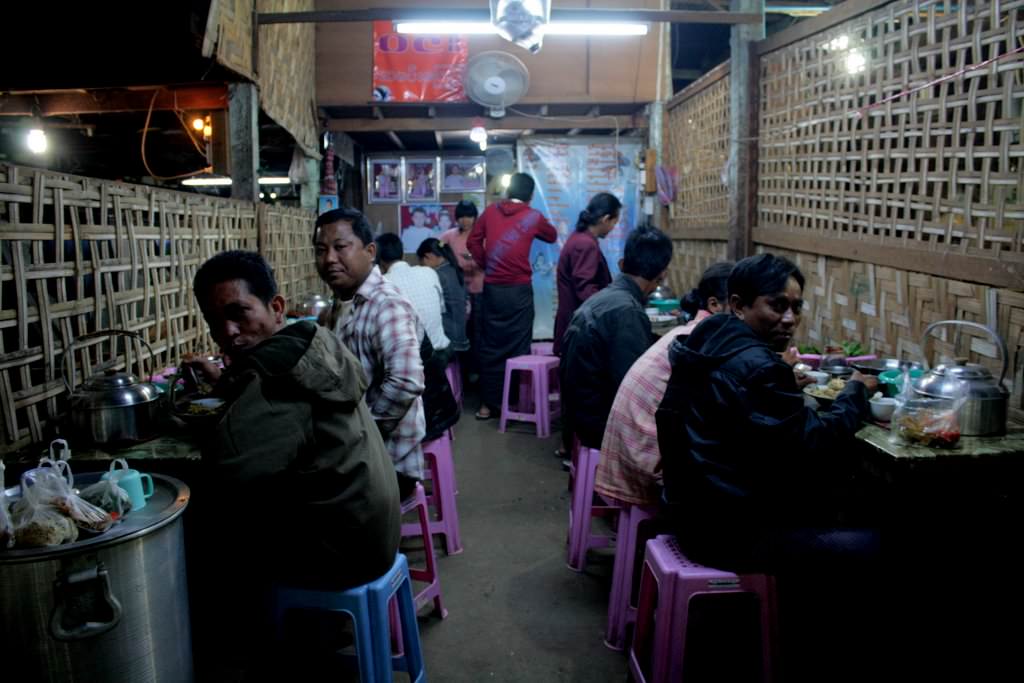
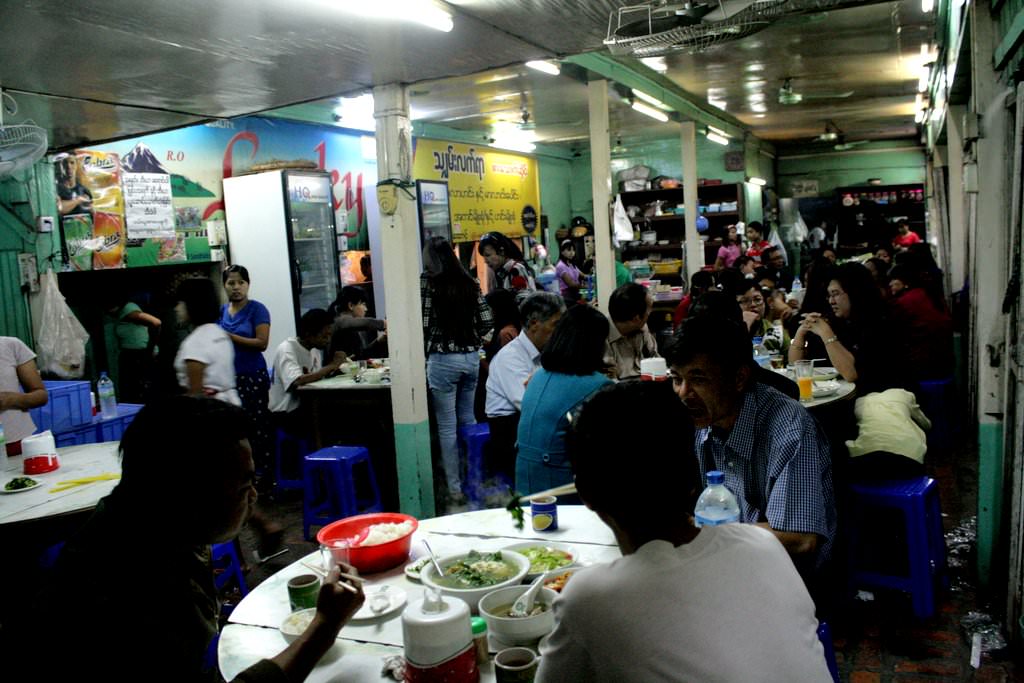
Even major cities in Myanmar feel like a village. The government provides its residents with almost nothing. Neglect and dirt is highly noticeable especially in cities. Pass the crumbling colonial buildings from the British rule there is neglect in every street corner. Piles of garbage that turn into little hills at the edges of the city, water channel flooding with foam, broken and ravaged sidewalks, generators everywhere – to cope with frequent blackouts, dirt roads instead of roads, only a few street lights that make the late hours of the evening dark and unpleasant, wounded puppies howling and a cloud of dust and exhaust surrounds everything. On their free time, residents of the city sit on low stools in the streets, drinking tea or beer and watching football on one screen and Burmese soap opera on another screen, so that everyone’s happy. For us, sitting on low stools in dark and grimy alleys was an unpleasant experience and made me think about the Yongonians (residents of the big city, Yangon) who do not know what it is to relax on the couch in front of the TV in a clean house.
Local products that characterize an entire cuisine
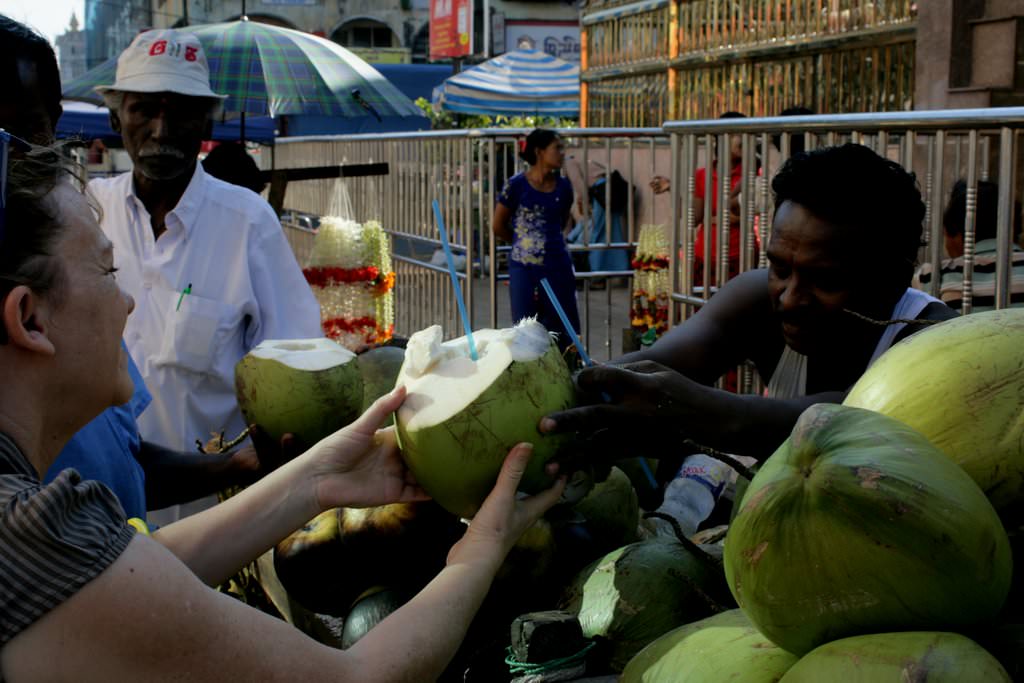
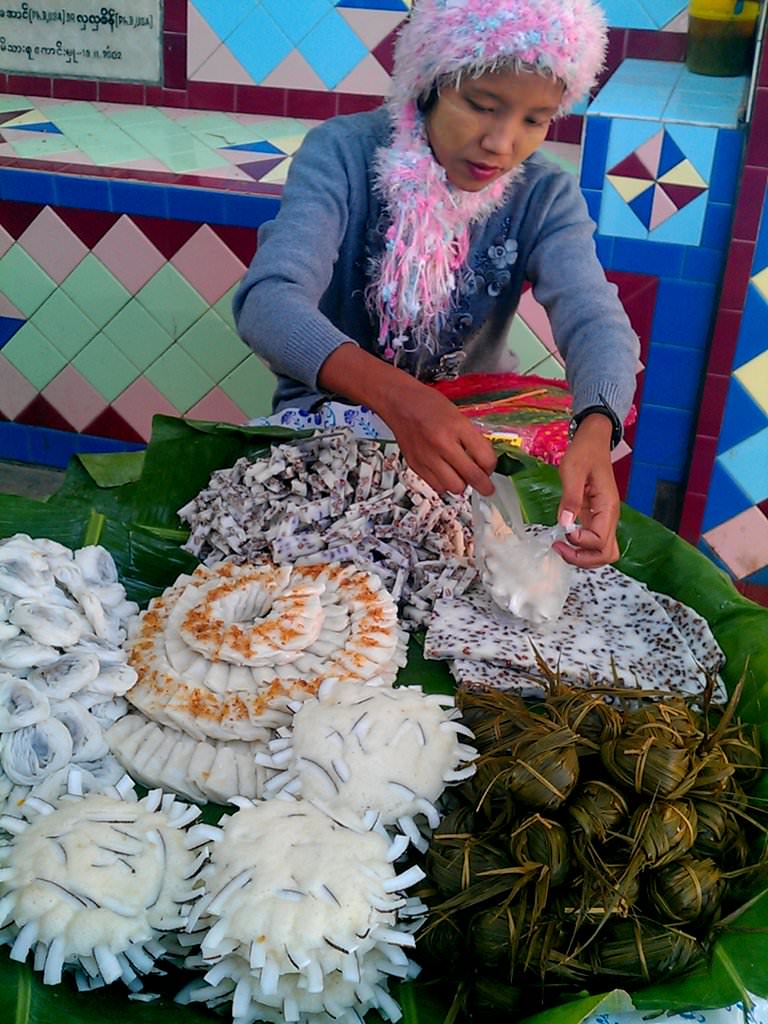
Coconut and banana are growing profusely in Myanmar, dedicated as offering to Buddha in the raw form and used as a key element in the Burmese kitchen. Coconut milk and coconut meat combined with rice and rice flour are used to create a slight sweetness steamed delicacies, occasionally stuffed with mashed red beans similar to Chinese desserts.
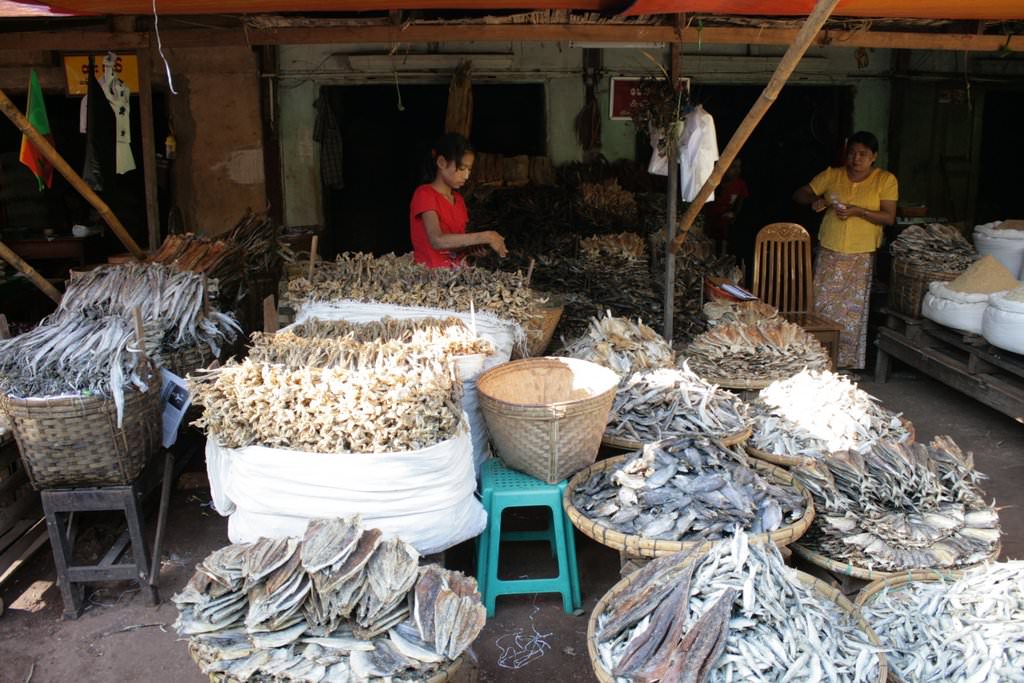
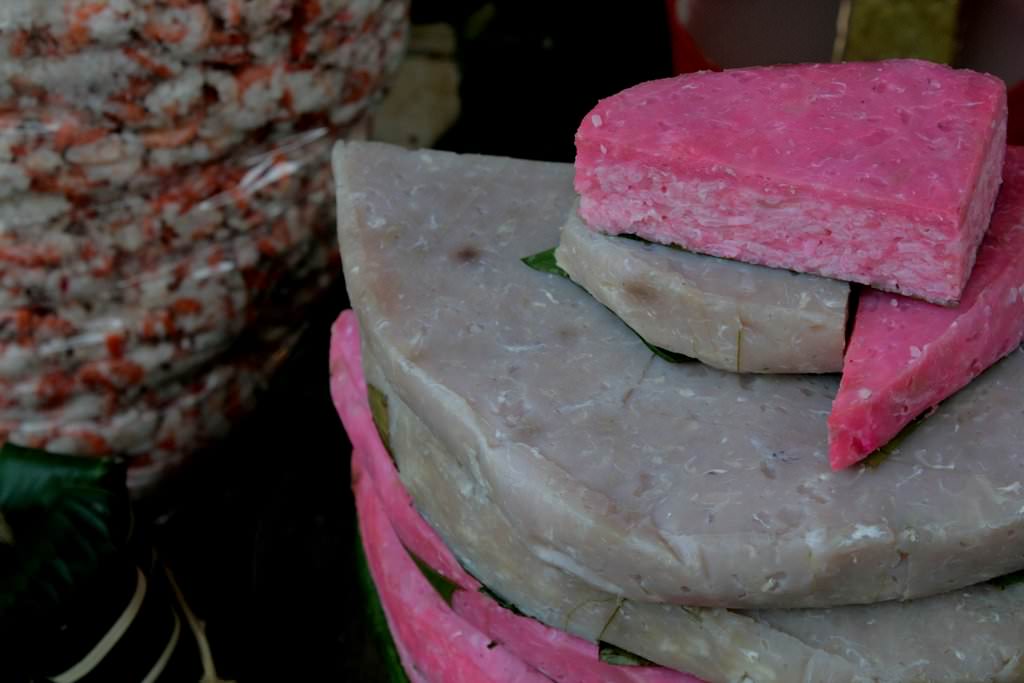
Small fish undergo preservation by salting, drying and grinding into a paste which is then used as the base of most dishes similar to Thai cuisine. From fish and prawns they make a kind of dense, round cakes that taste very similar to ceviche with a chewy texture. These fish cakes are a delicacy often sold cut into slices and wrapped in banana leaves like luxury Bonbons.
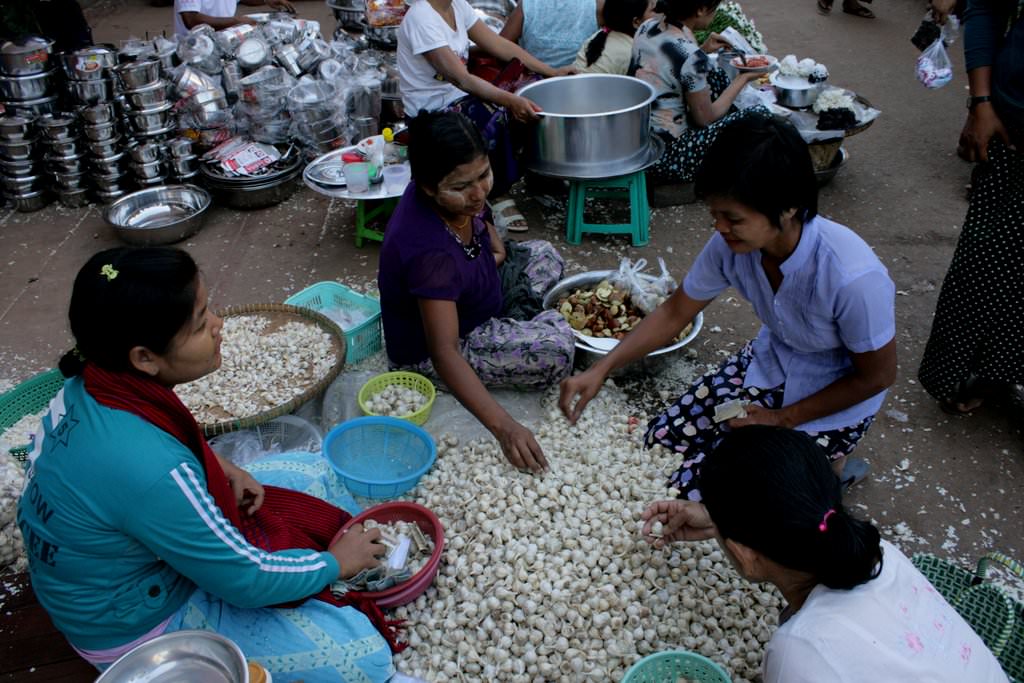
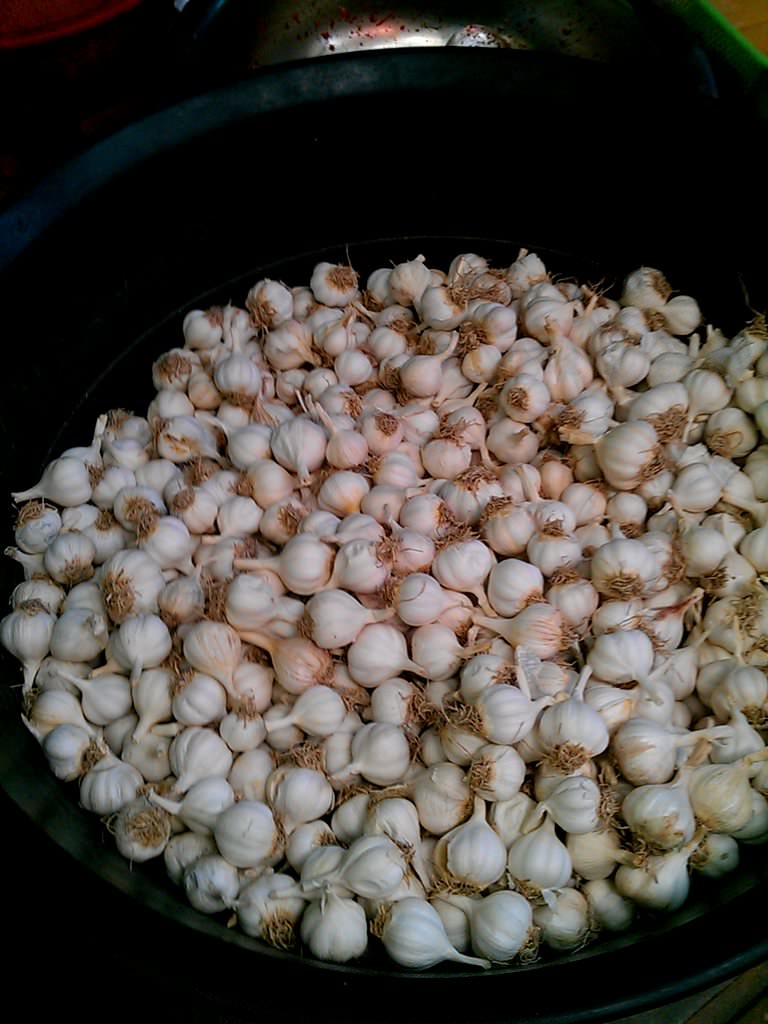
Garlic is another key element in the Burmese cuisine. “Garlic is the national spice”, so they told us proudly. Various types of garlic is used in the kitchen, dry Chinese garlic, roots and leaves of the wild garlic which resembles green onions and the most common local garlic: small bulbs with some very small cloves. Cloves of garlic, separated from the bulb but unpeeled are often found in tiny bowls on the tables in restaurants. The diner takes the raw garlic with his hand, peels it and eat it between bites of seasoned rice, same as with the pickled tea leaves.
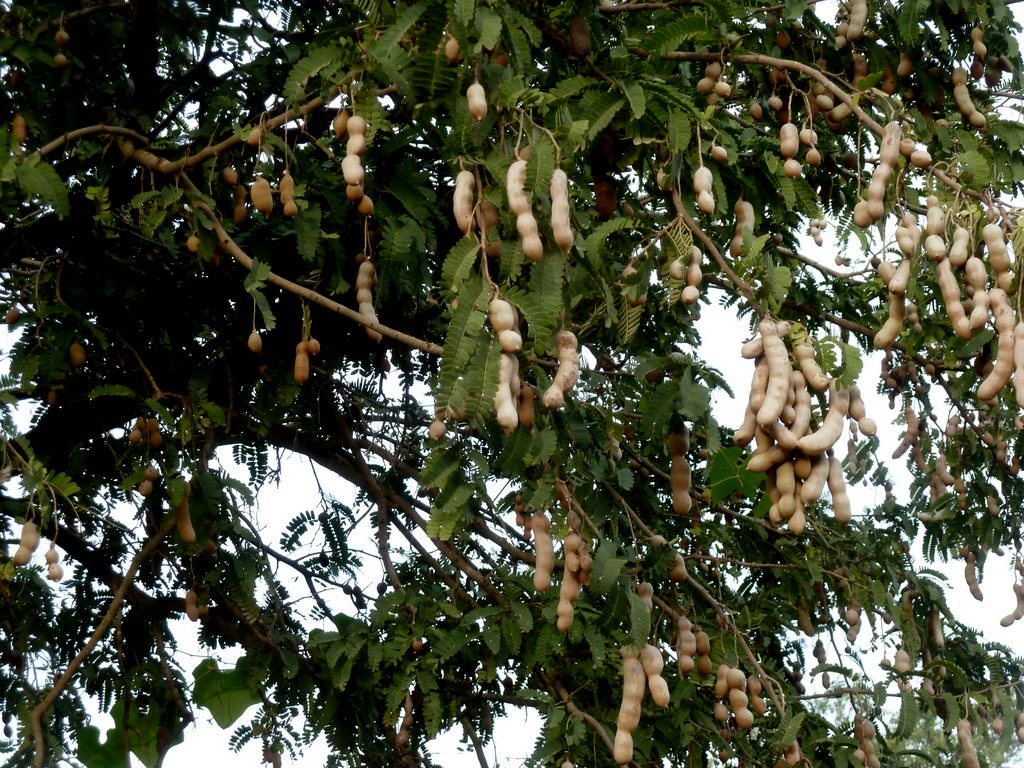
Tamarind also grows abundantly in Myanmar and its black and tart fruit is being processed and becomes candy for children and often used as a spice in cooking.
Why eat when you can only chew?
More than eating, Burmese, mostly men, engaged most of their time in chewing the so-called Betel Nut. This nut resembles Nutmeg, but in fact is the fruit of the Areca tree, cut into pieces and wrapped in the leaf of the Betel plant with the addition of lime (not to be confused with the citrus lime). Chewing this combination creates a stimulus effect but stains the mouth and teeth with dark red color. Stalls selling Betel-nut ready to chew are everywhere and anywhere. Each booth has its own folding technique and combines different spices for better taste. The best stalls have permanent queue. More than half of the street stalls are Betel-nut stands, and chewing it, by the way, is proven to be harmful and carcinogenic.
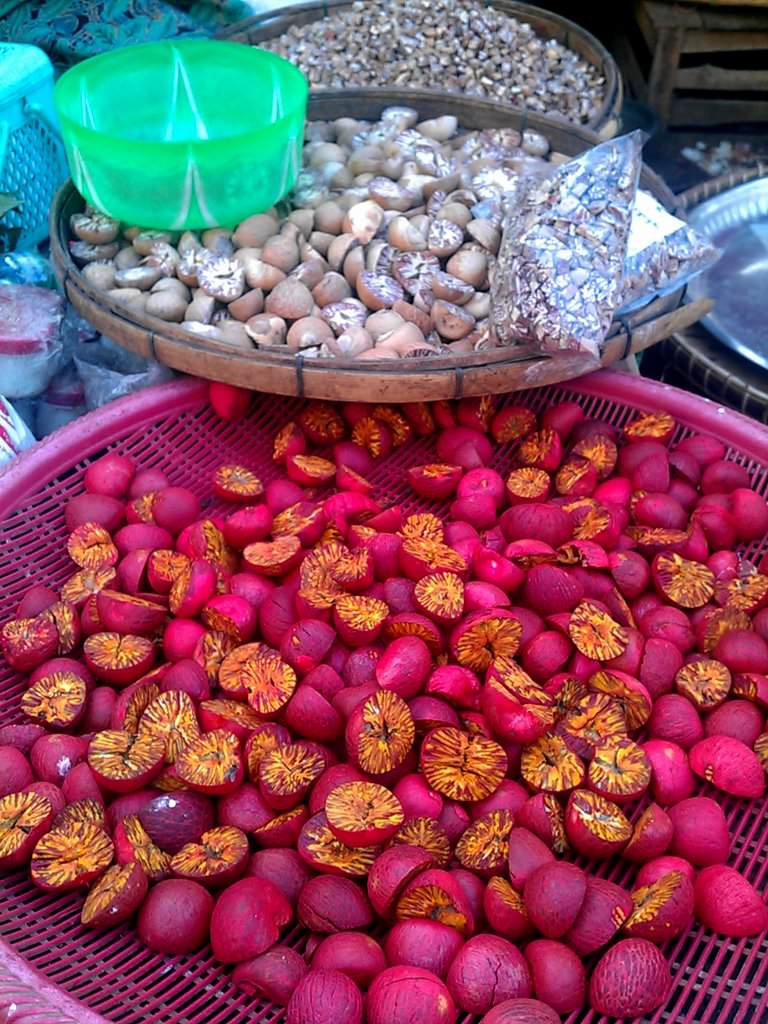
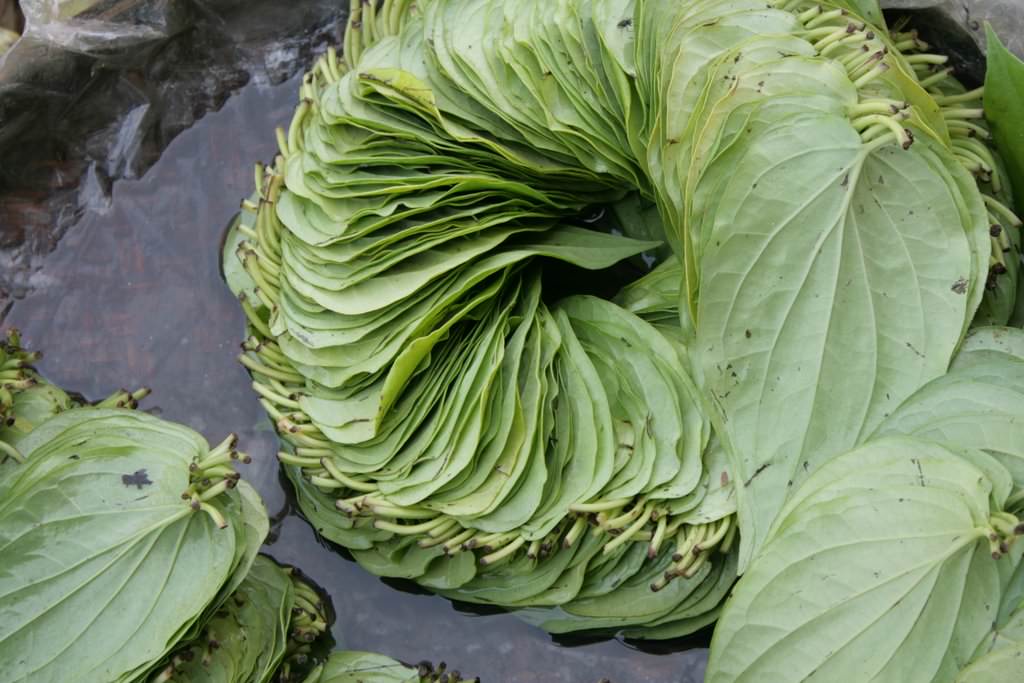
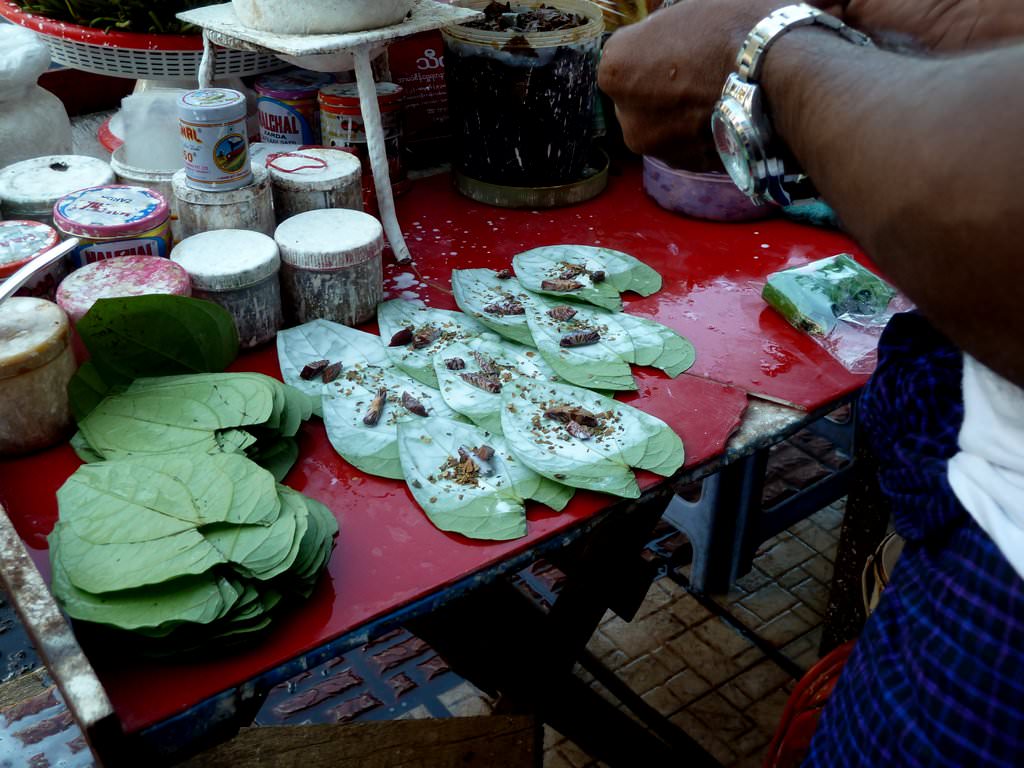
Eating on-the-go
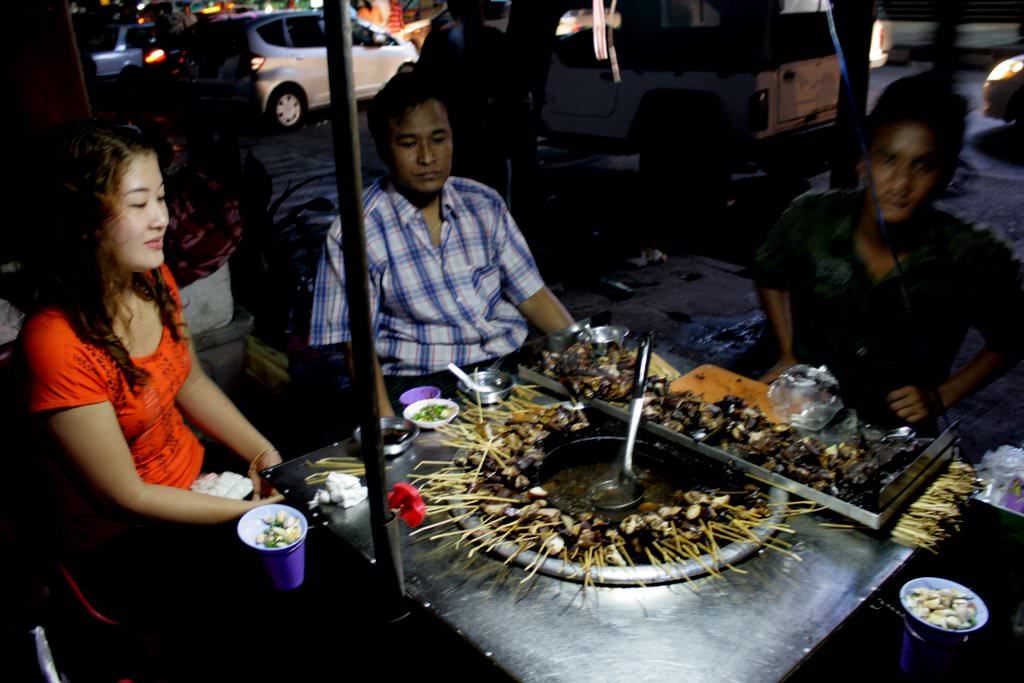
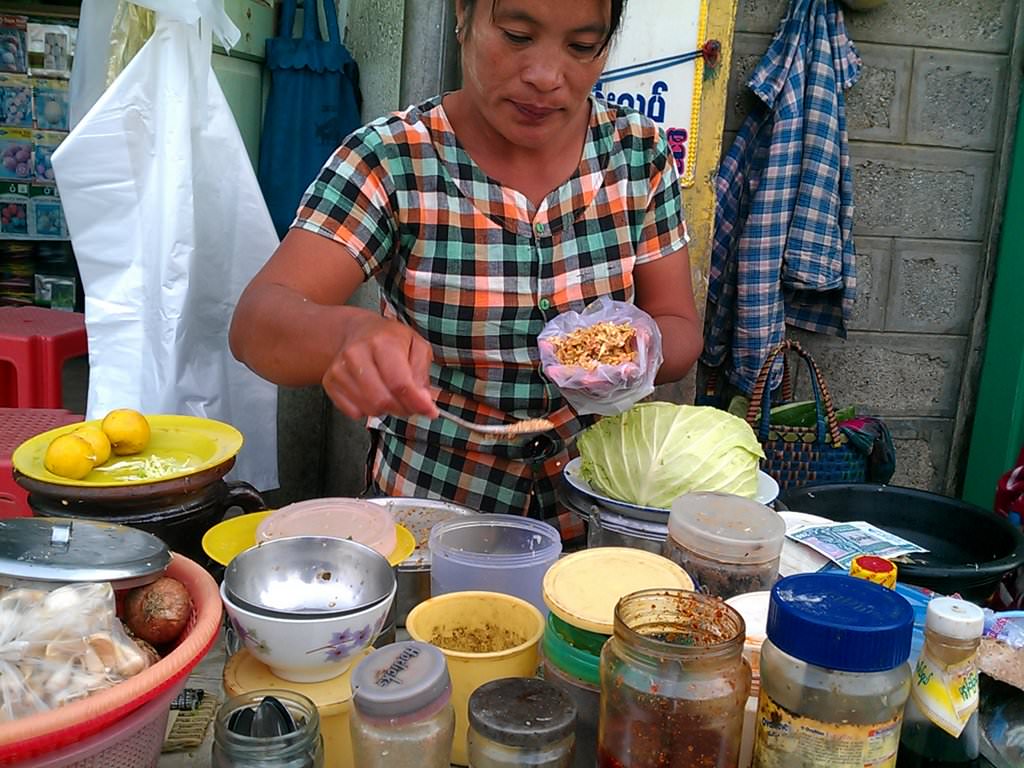
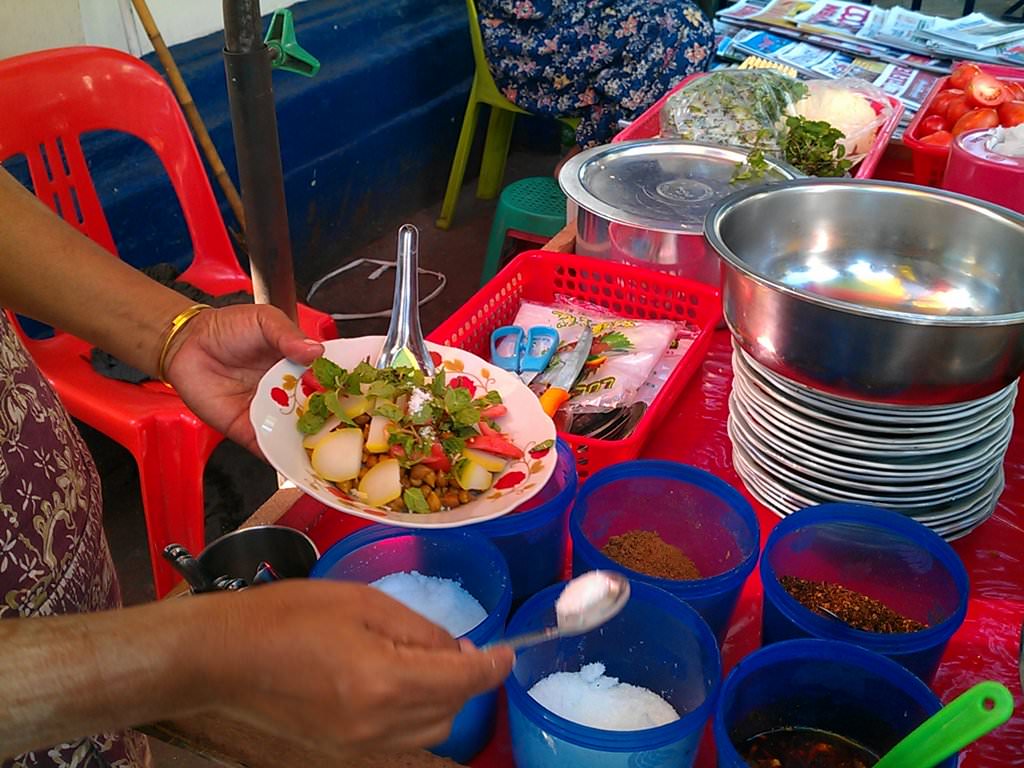
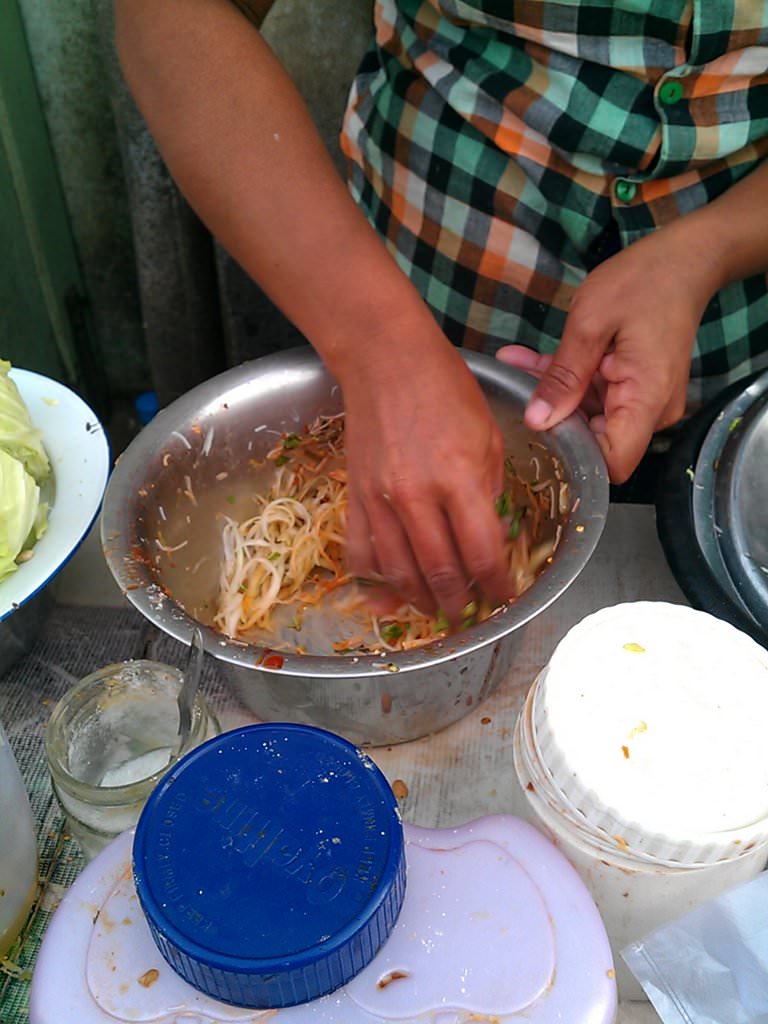
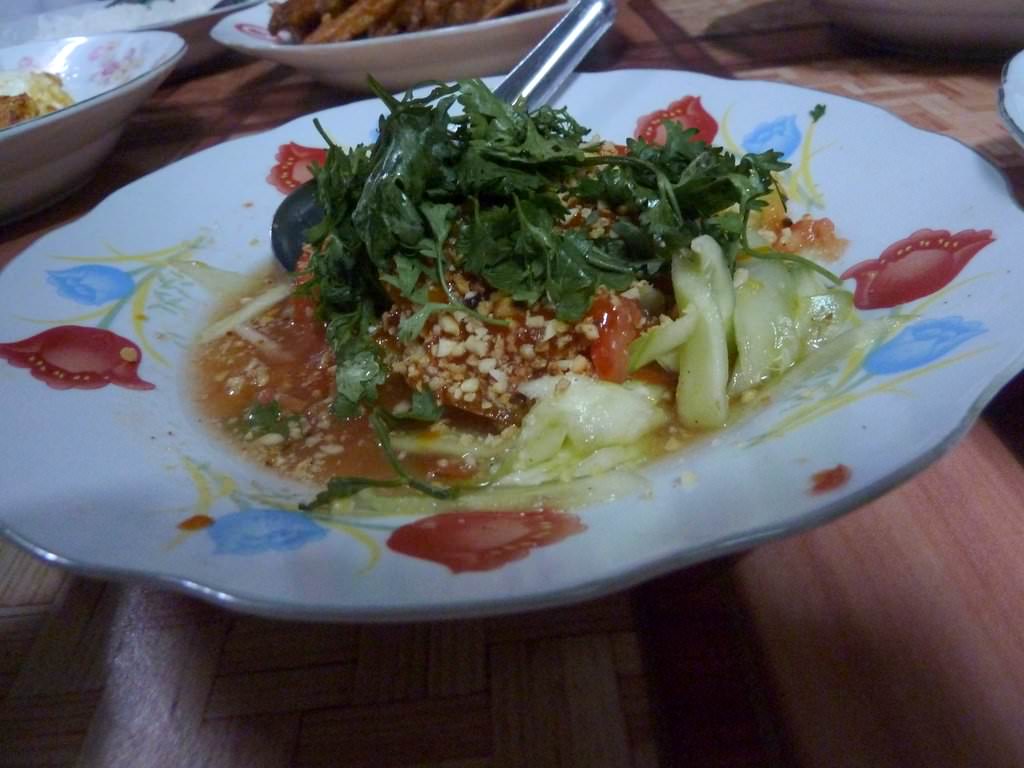
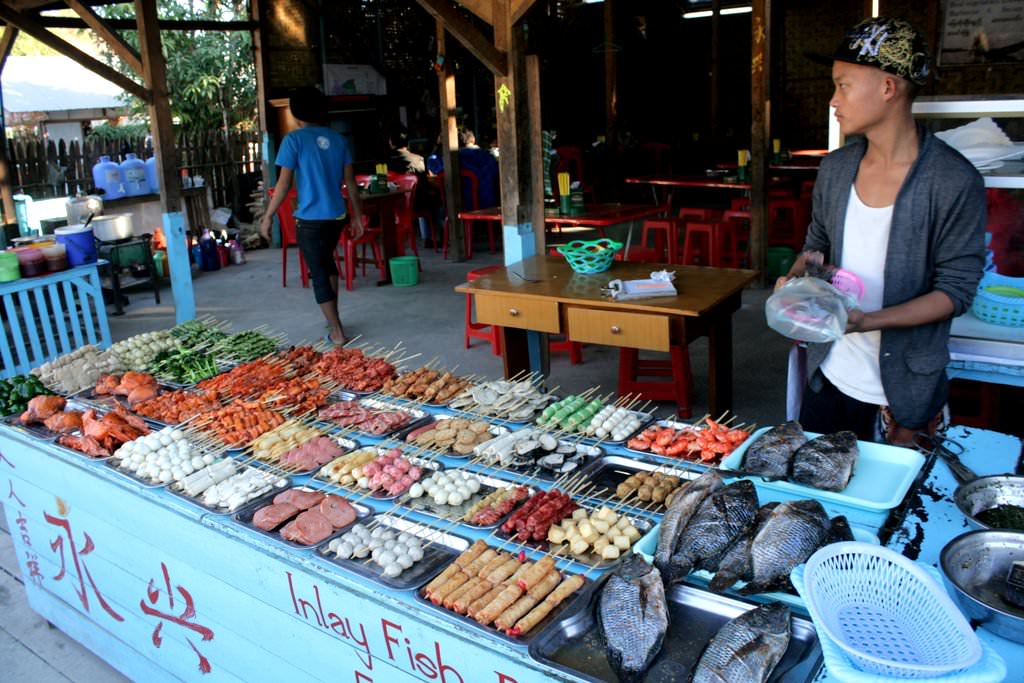
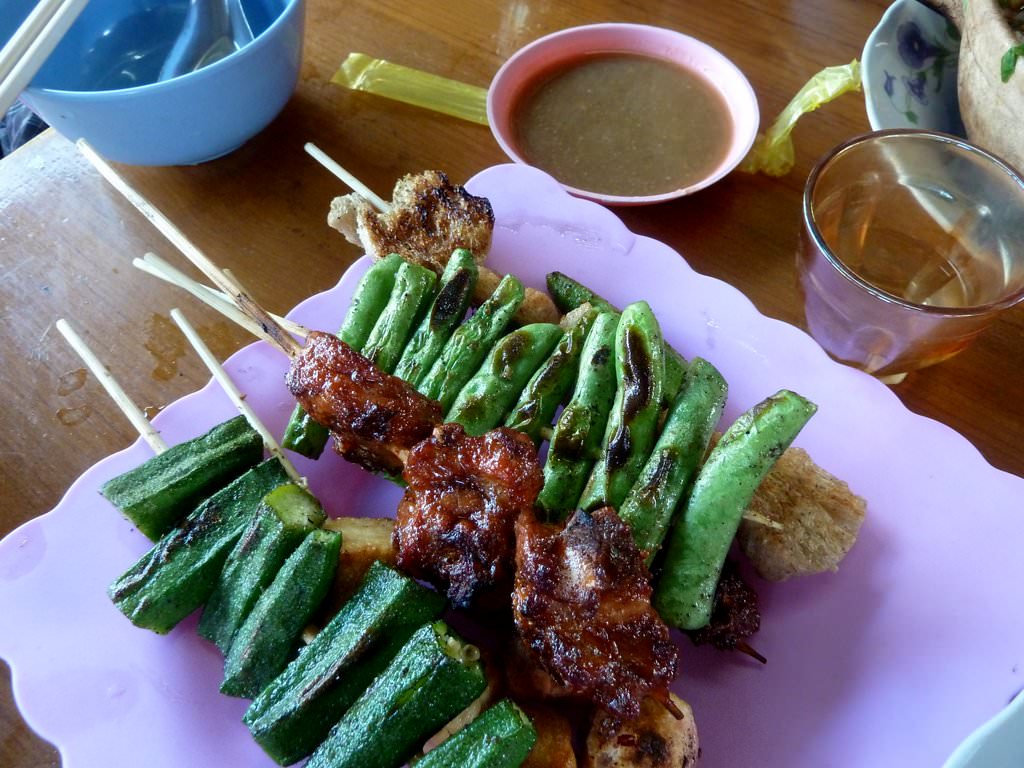
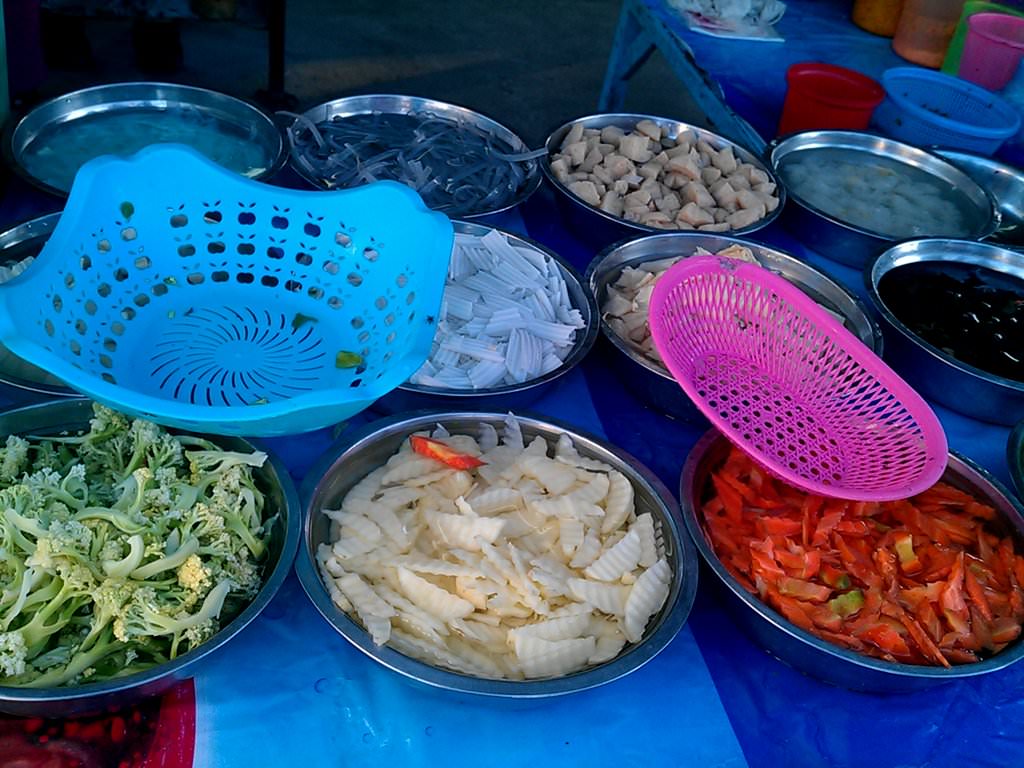
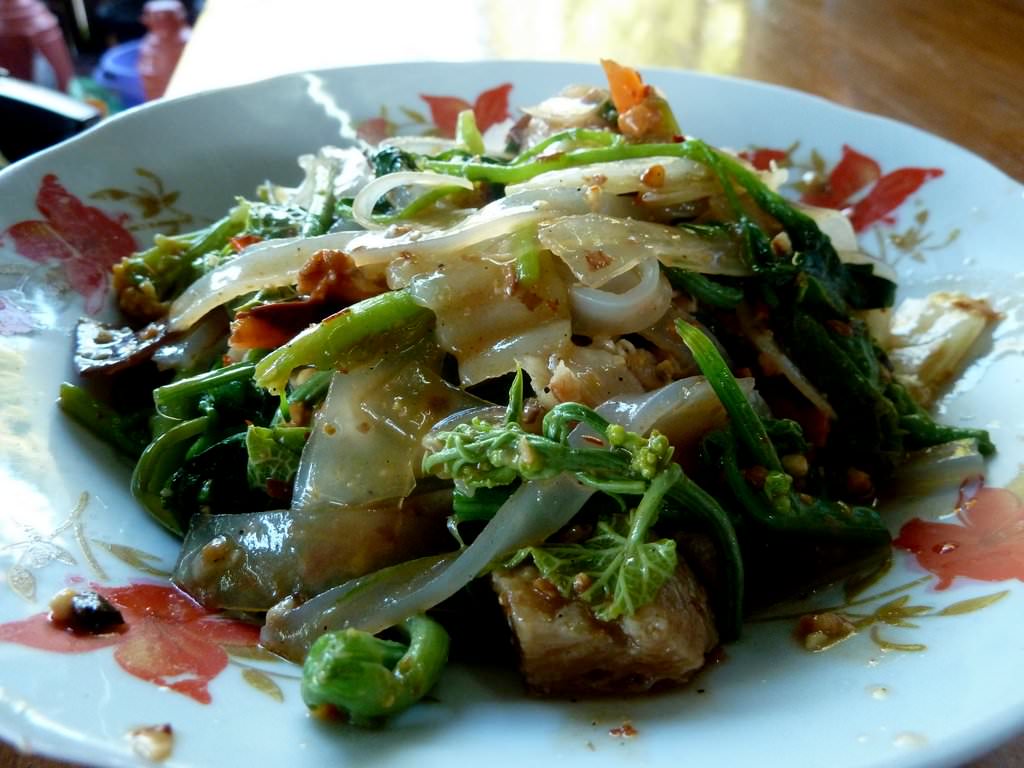
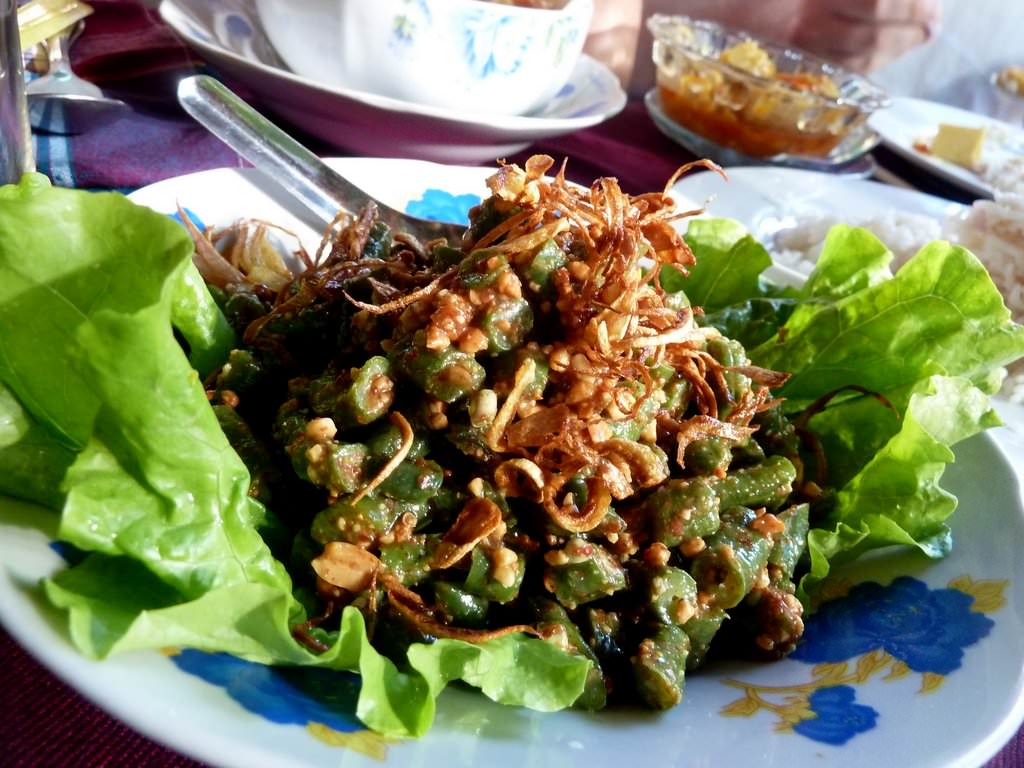
Street snacks are mainly divided into two types: 1. colorful skewers which are carefully selected by the customer and then deep-fried and 2. fresh vegetable salads, seasoned with spices and sauces. Apparently it’s possible to skewer almost everything: quail eggs, vegetables, tofu, chicken feet… but primarily you’ll find various forms of processed fish balls. Nice to try but it is very oily and the Burmese unfortunately have not discovered the wonders of absorbent paper yet. The Salads are wonderful but we couldn’t always find a salad stand when we wanted one. Fresh vegetables such as cabbage or green papaya chopped and mixed with various spices, chopped peanuts and chili. Sometimes you can get the lady to add a a small quarter of tomato. Another salad worth trying is a green bean salad with chopped peanuts and fried onions – Burmese classic and delicious dish. Occasionally you can find places with bowls of fresh vegetables, rice noodles, fish balls and unrecognizable things. The cook will take a small plastic basket, mix a little of everything and stir-fry the selection on the wok to get a great dish.
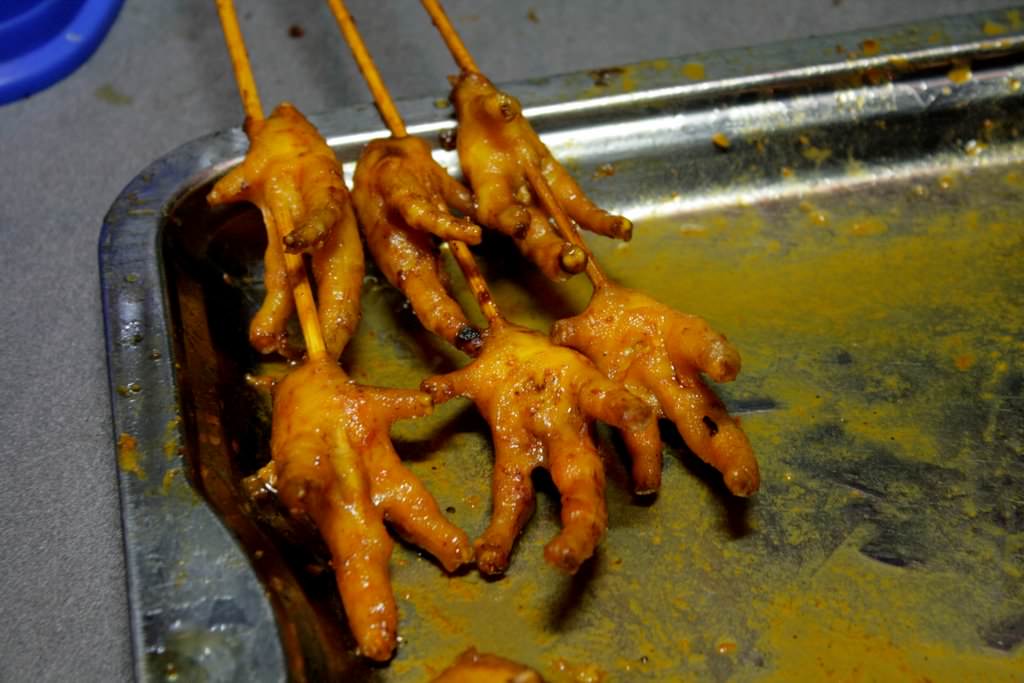
Unique delicacies
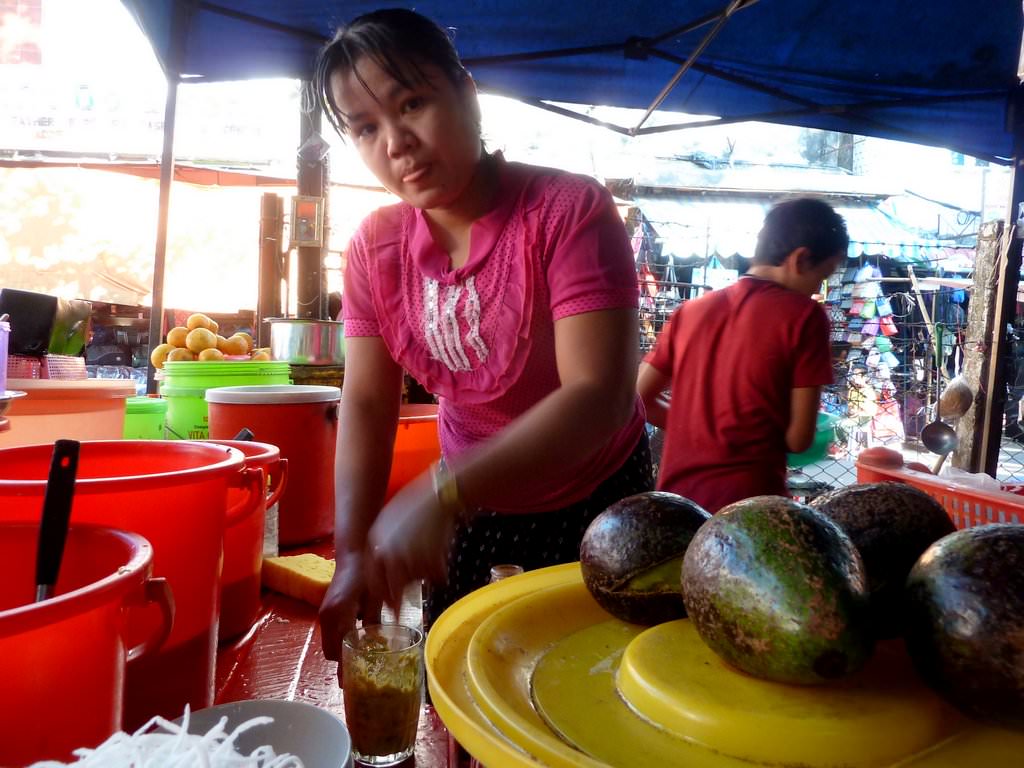
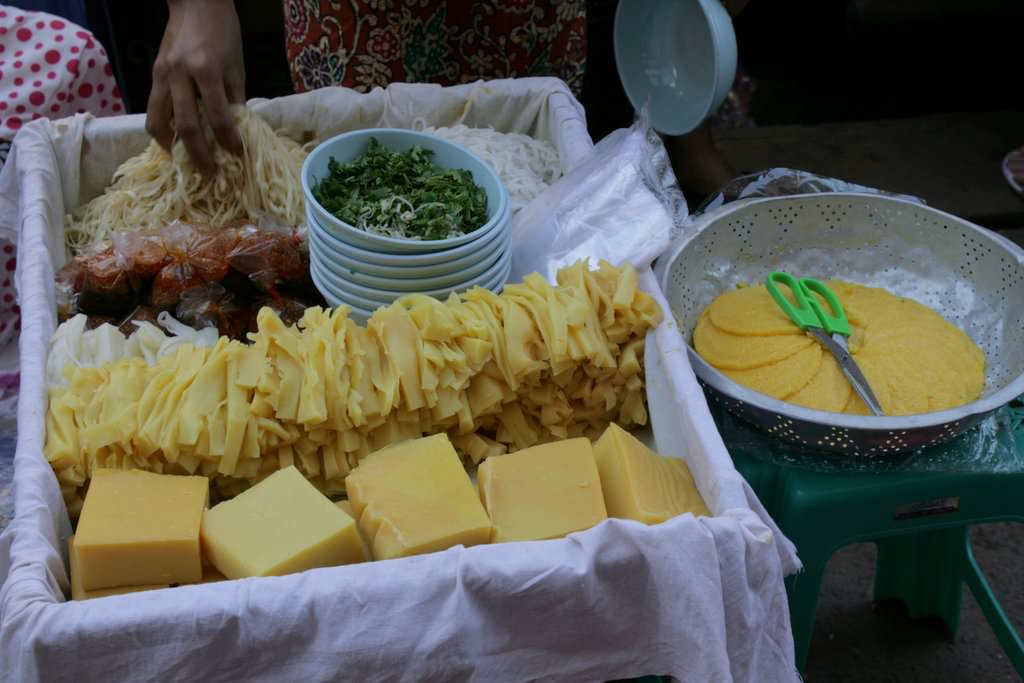
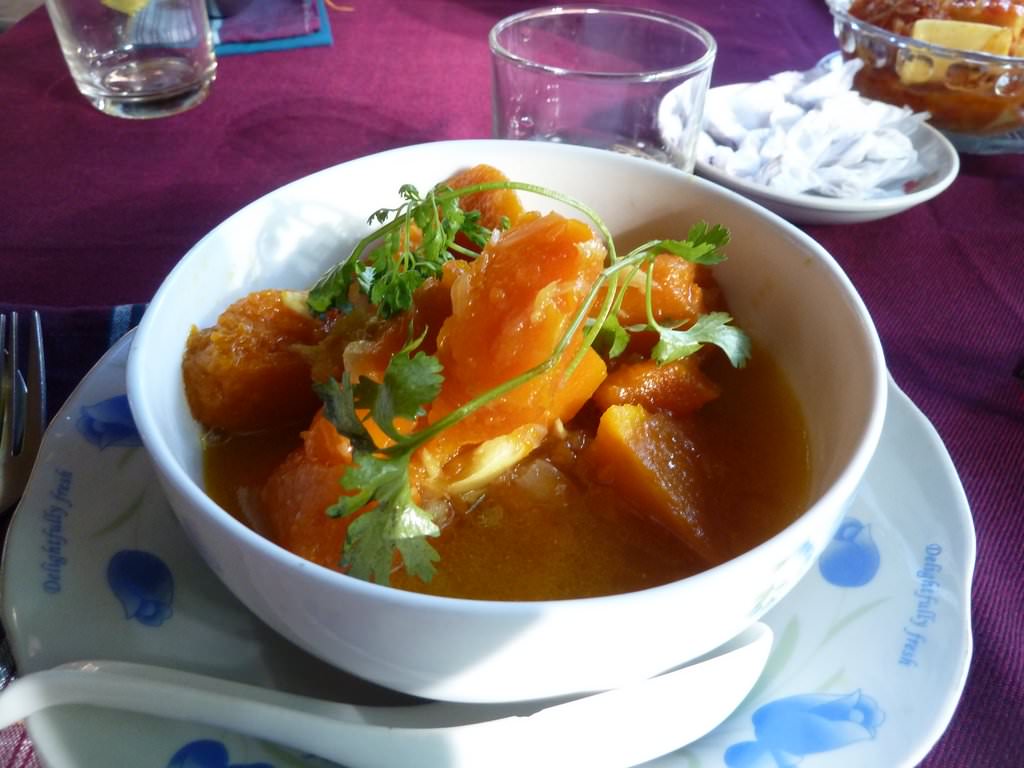
More from the Burmese cuisine is an avocado smoothie: large juicy avocado is crushed either manually or with a blender along with sugar syrup and condensed milk. Tastes like sweet guacamole! Another specialty is tofu made of yellow beans. You can find thin stripes of the yellow tofu flavored with a variety of spices, or alternatively, cut into cubes then cooked as curry with coconut milk and pumpkin.
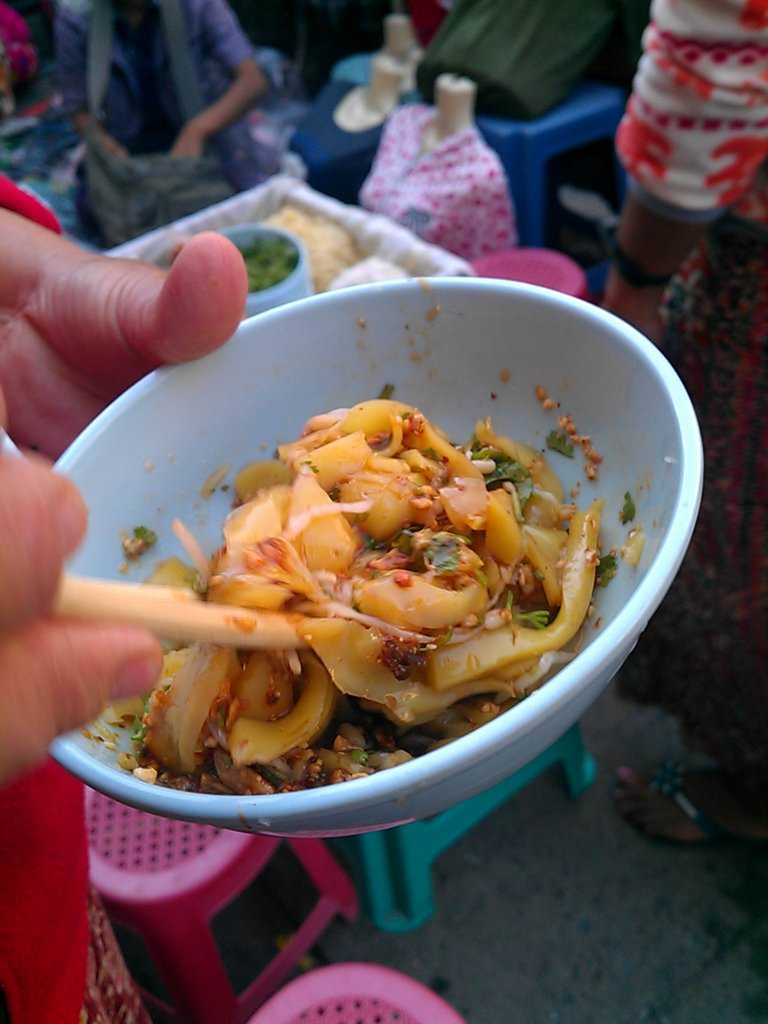
In the markets you can see interesting and colorful fruits and vegetables, but the vegetable that I was most impressed of, we were able to find only in the markets around Inle Lake, looks like a brown root or bulb with a thin skin that can be peeled like a banana. Revealing white, juicy flesh that tastes something between a radish and an apple and therefore was given the nickname “Radishapple”. We discovered later it is commonly called Chinese potato or Jicama.
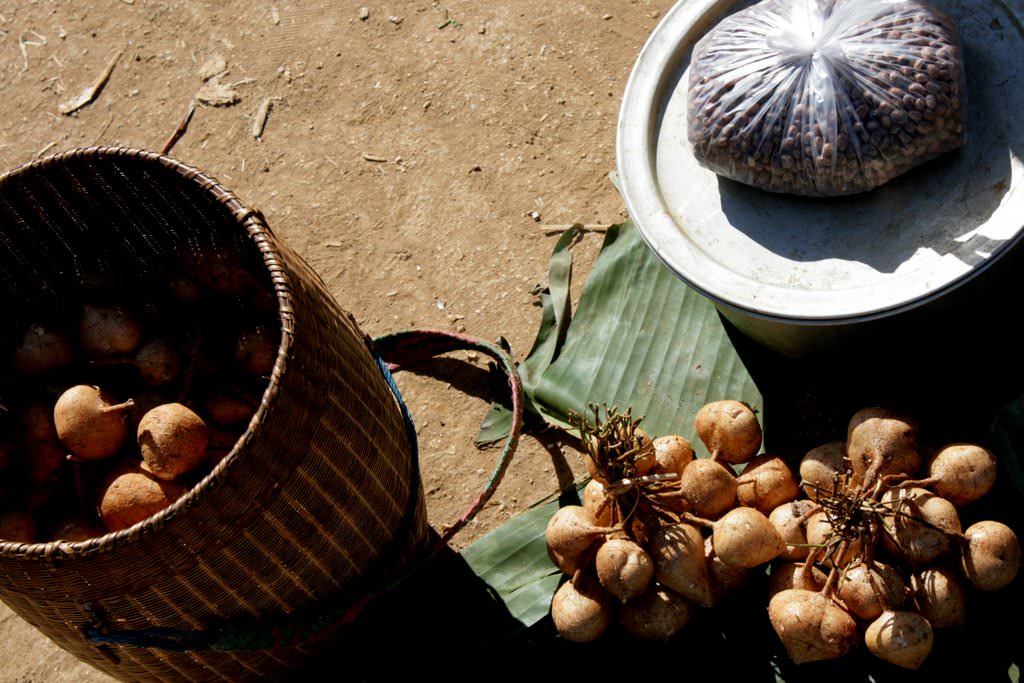
- Jicama in the market
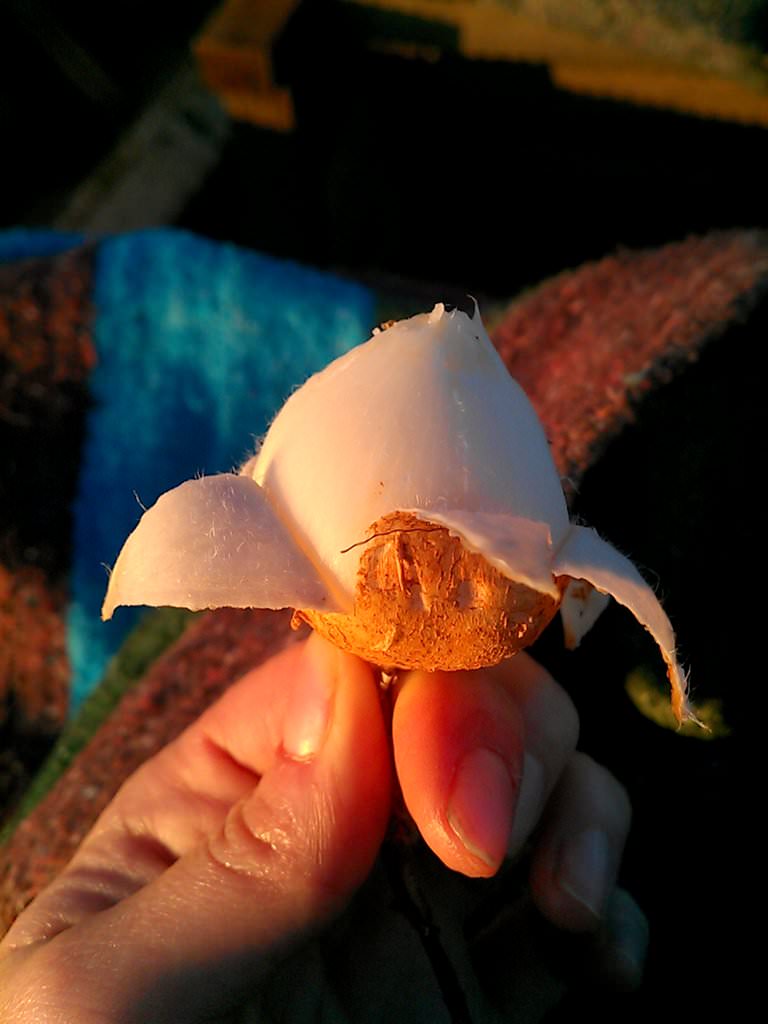
- Peels like a banana and tastes juicy and wonderful
Something different for a change
If you get a little tired of the Burmese food (and you will get tired of it sooner or later), you should enjoy some of the Chinese food, as China is one of the countries bordering Myanmar. Chinese food is always delicious and comforting. Especially recommended to pursue the steamed buns filled with goodness and some red hot sauce.
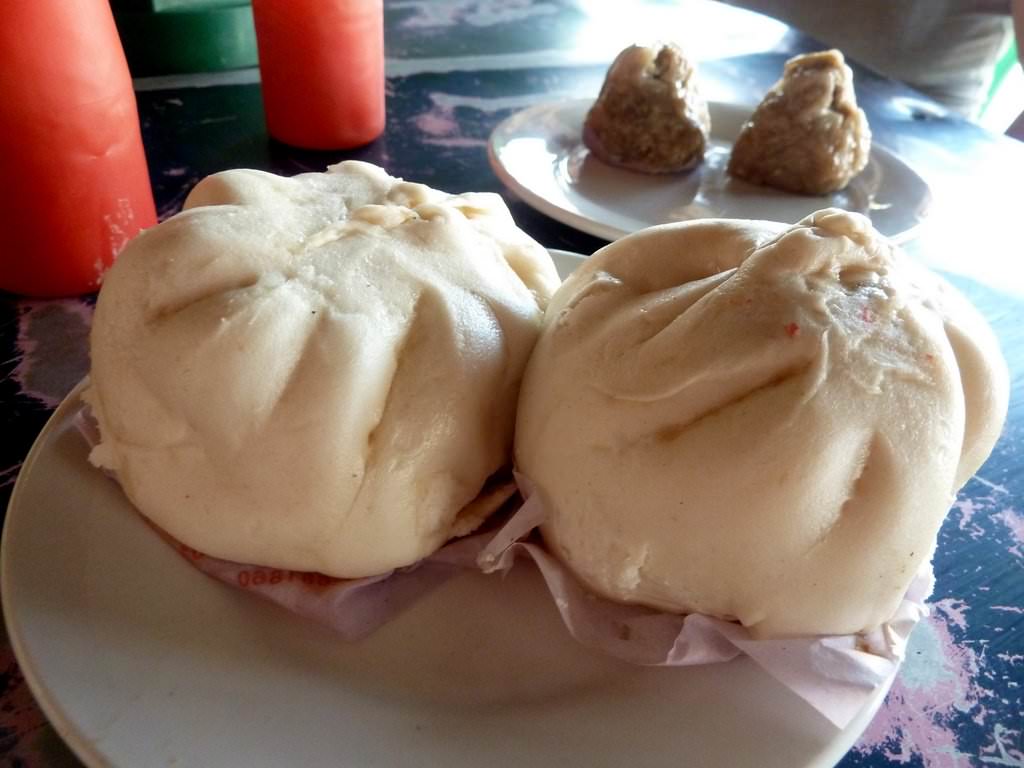
- Chinese steamed Bao buns stuffed with chicken or pork with spicy hot sauce
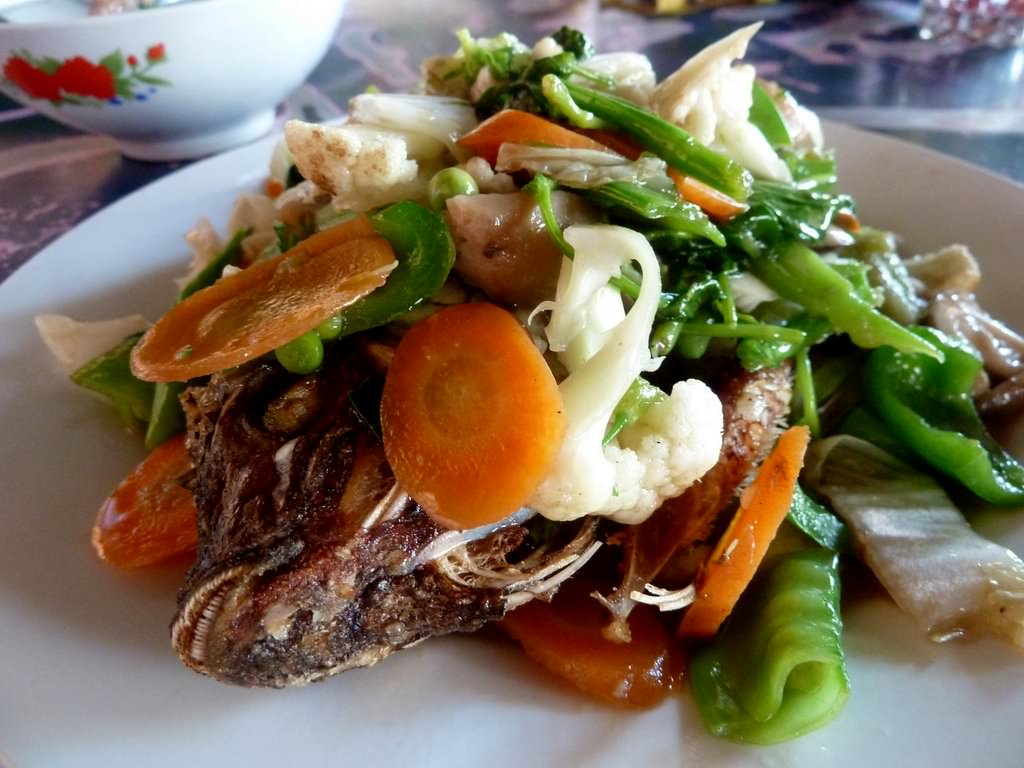
- Chinese fried fish with vegetables
Beverages
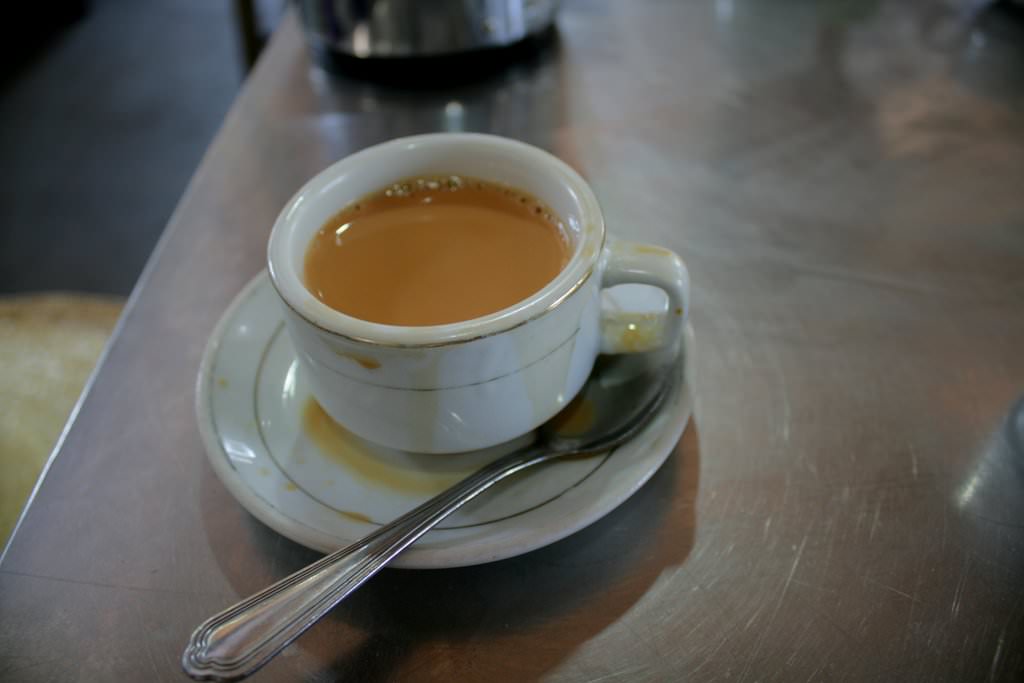
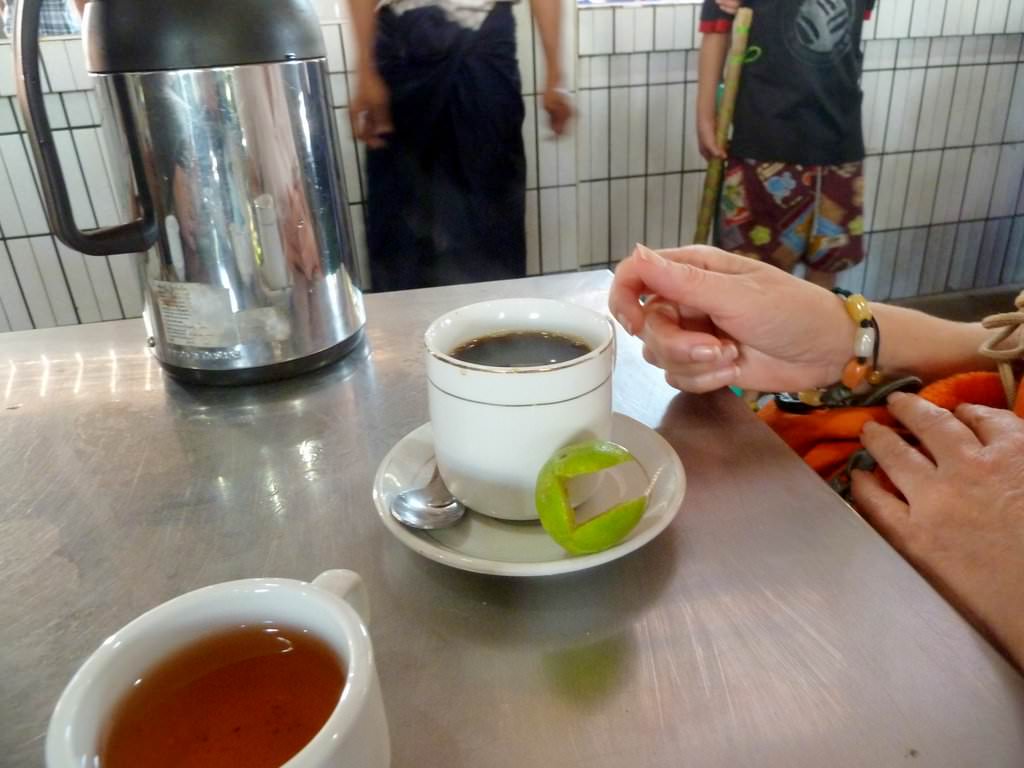
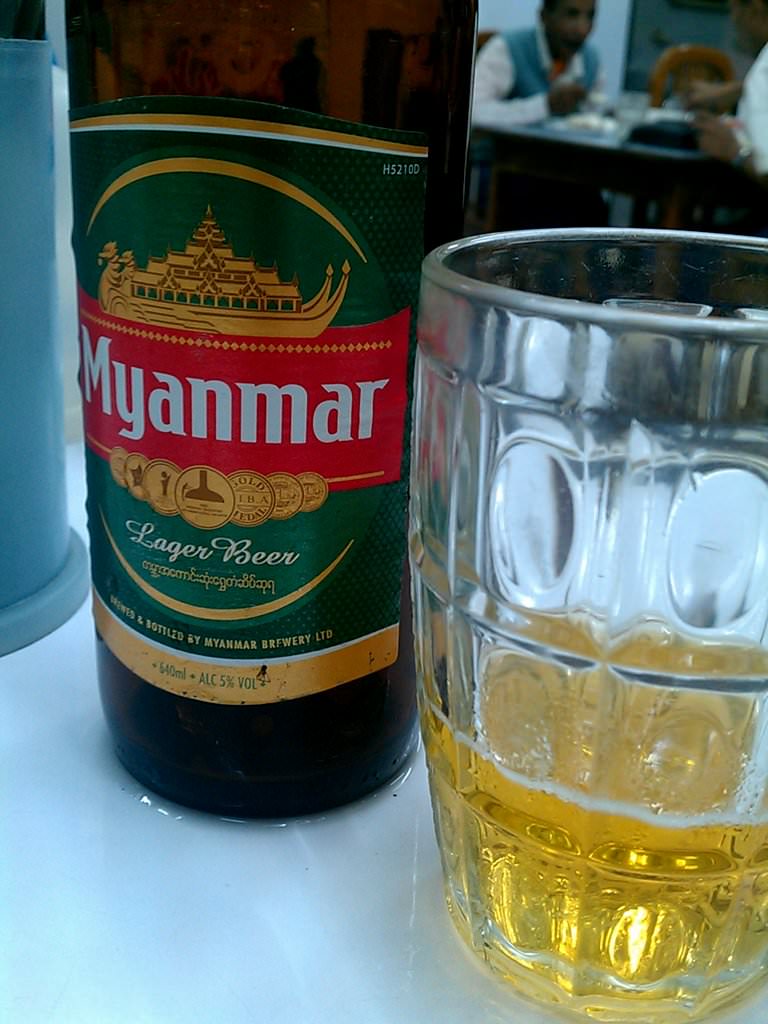
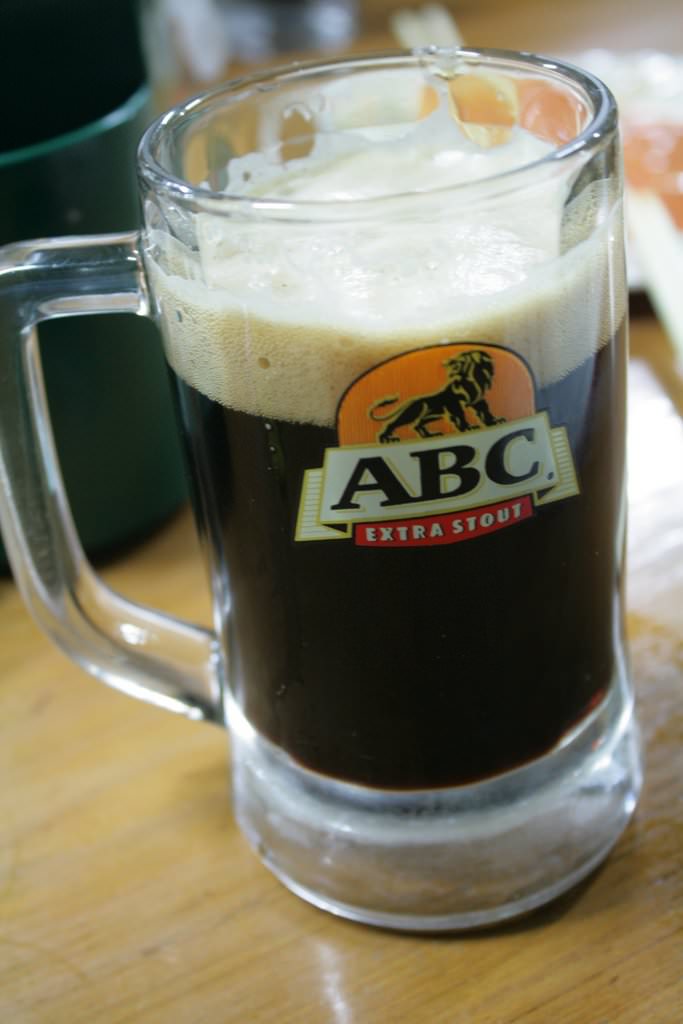
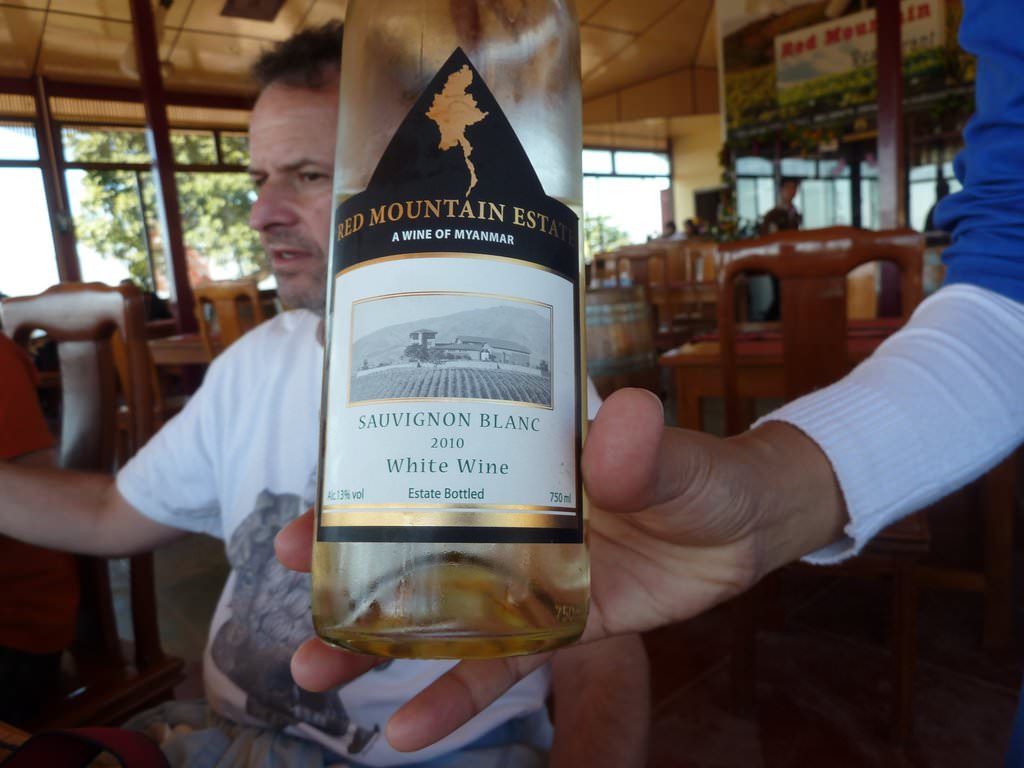
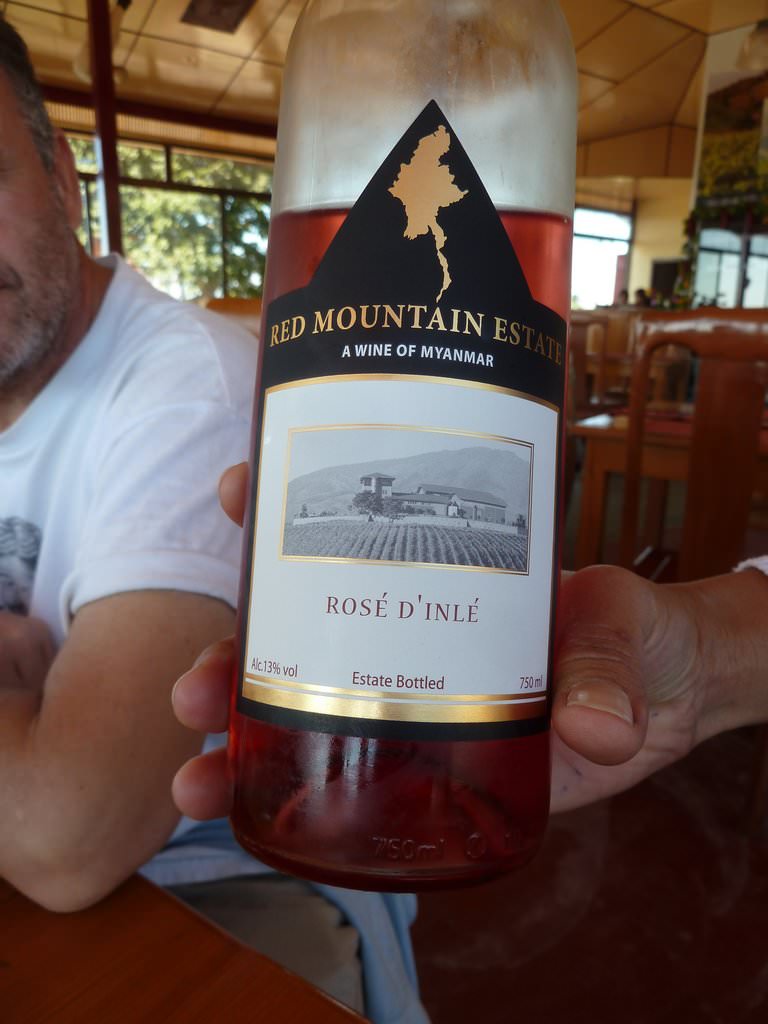
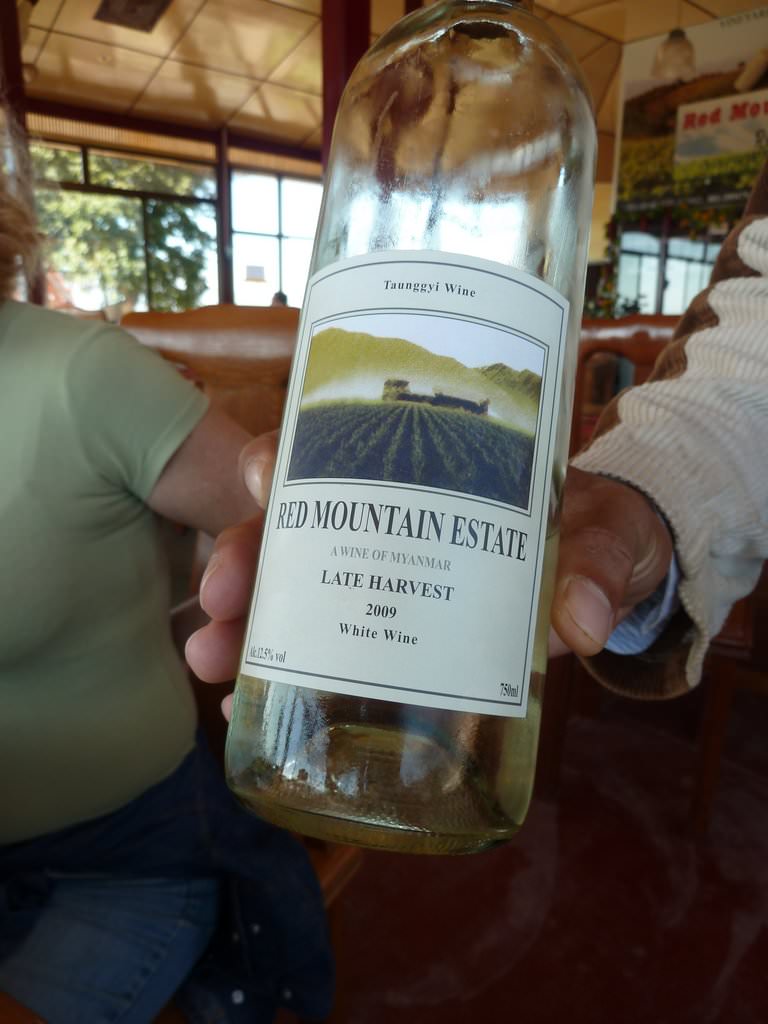
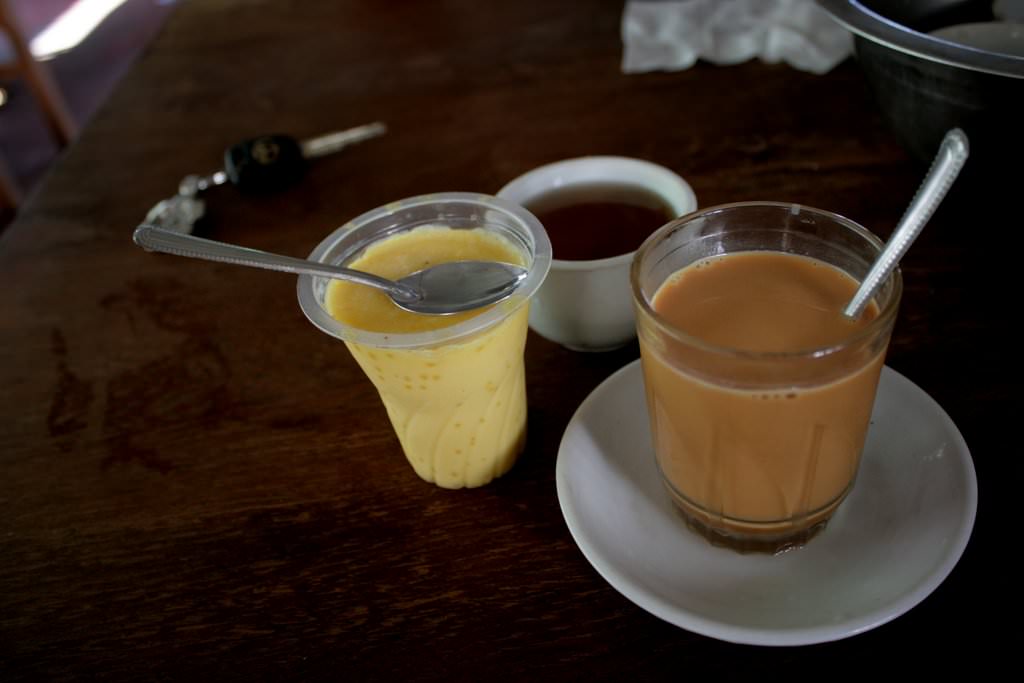
Myanmar’s most popular drink is naturally green tea served at any restaurant freely. But if you sit in one of the many tea houses, order black tea with milk. This tea mixed with condensed milk and sugar, made by experts only, who transfer the tea from cup to cup until it reaches the right color and consistency Alternatively, you can ask for black coffee that comes with a slice of lime. With the tea or coffee snacking is mandatory. In the evenings everyone’s sitting in the streets or in a pub to watch TV with the entire neighborhood and drink beer. There is the “Mynamar” light beer, affordable and widely available. I liked better the dark lager beer called ABC, nice and fun beer. More serious matter – the local Burmese wine surprisingly does exist . We visited a winery, perhaps the most developed winery, tasted a selection of wines which were very nice. The wine is still in its early stages but very light and fruity.
Falooda – a must try
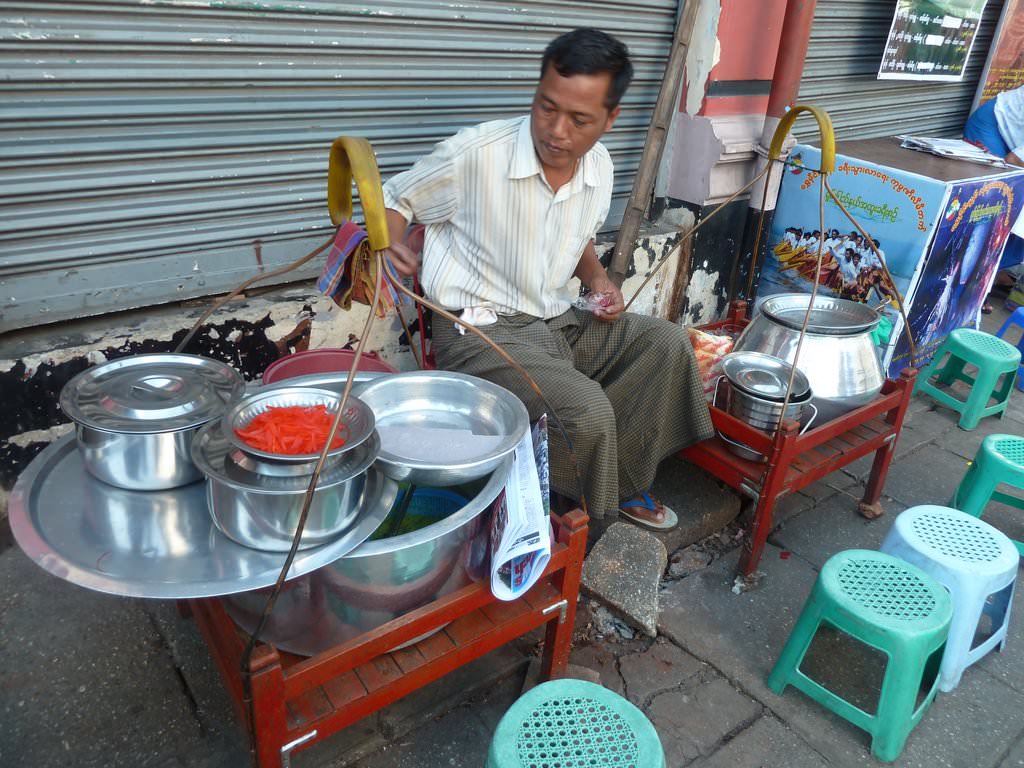
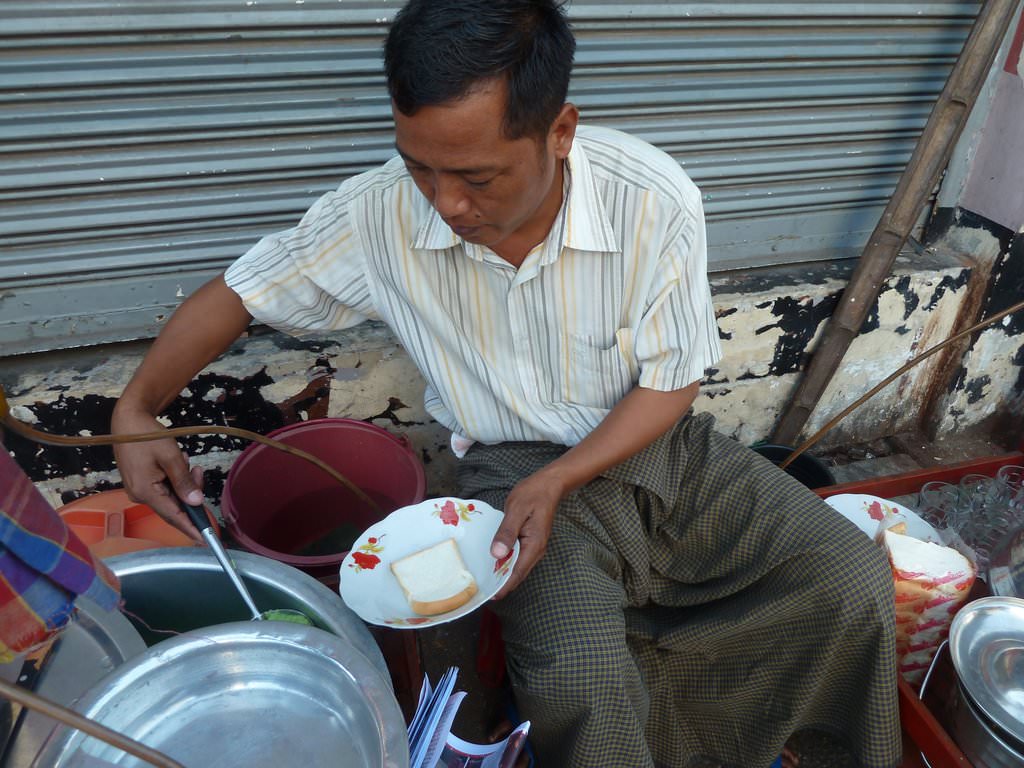
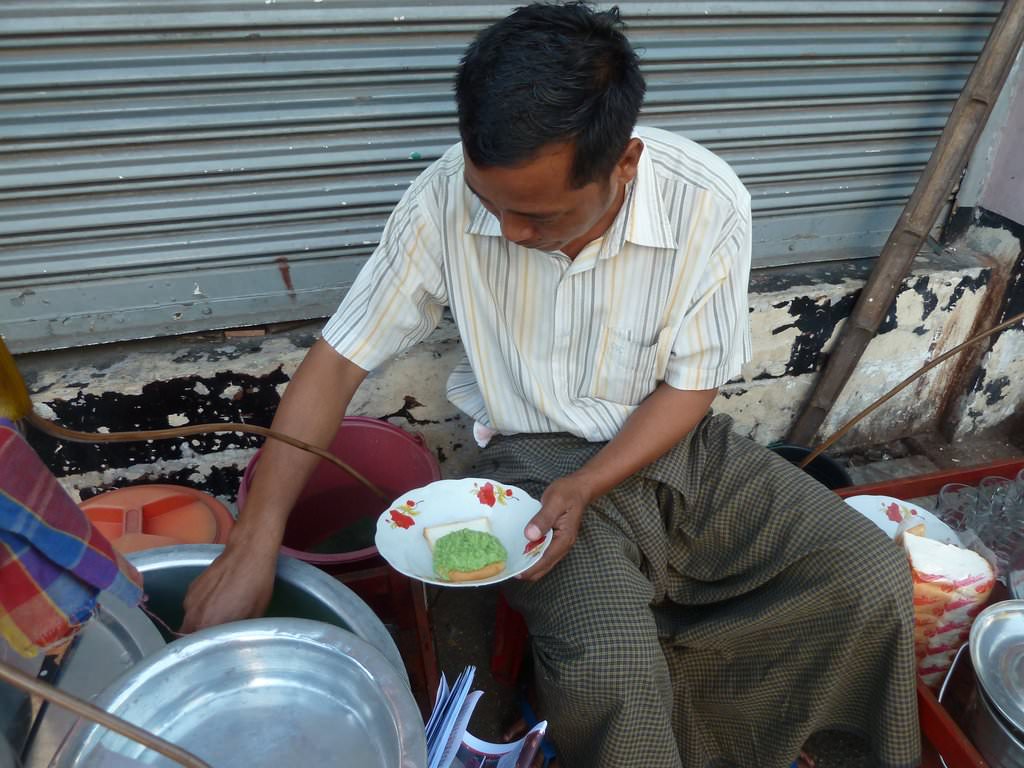
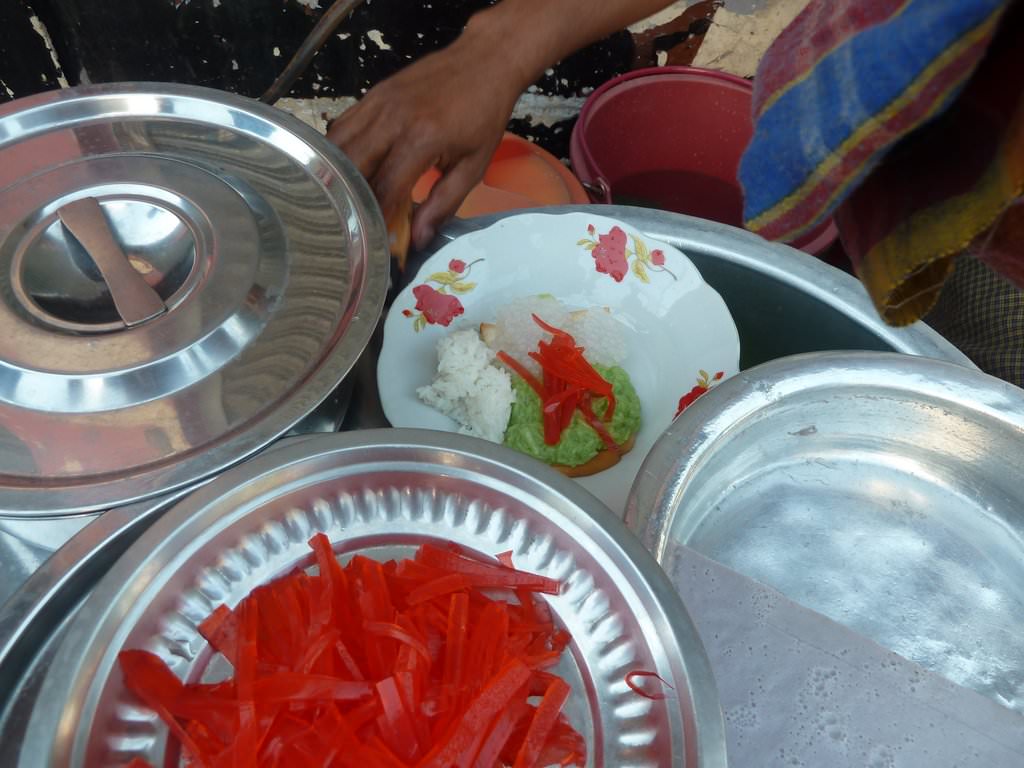
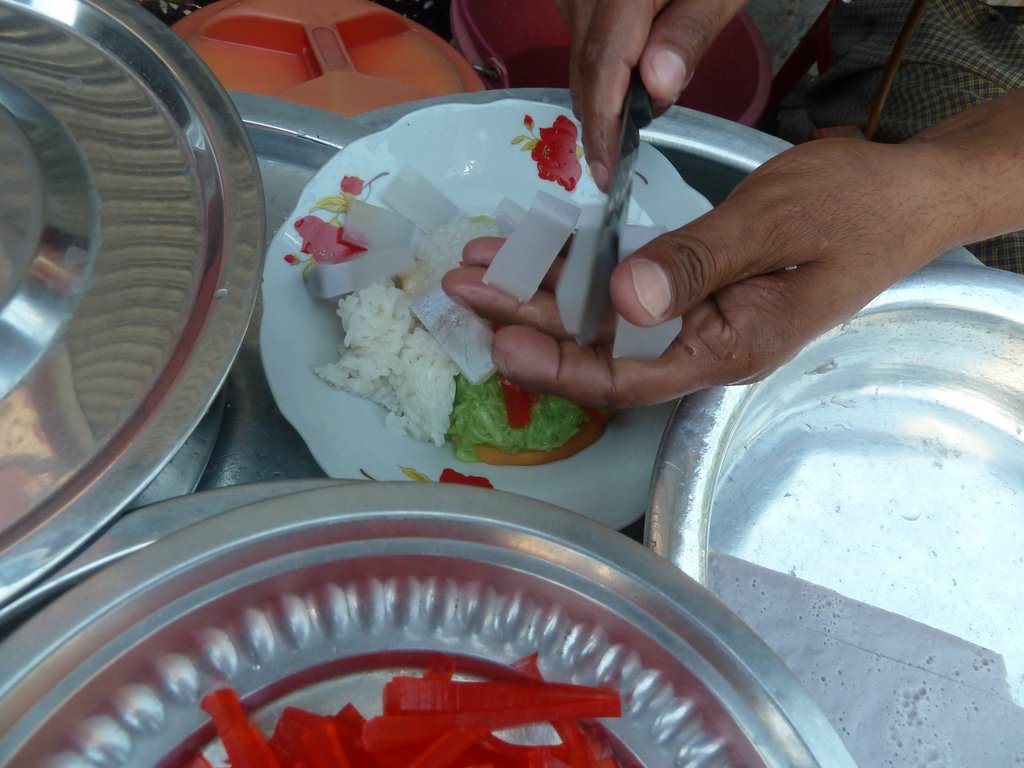
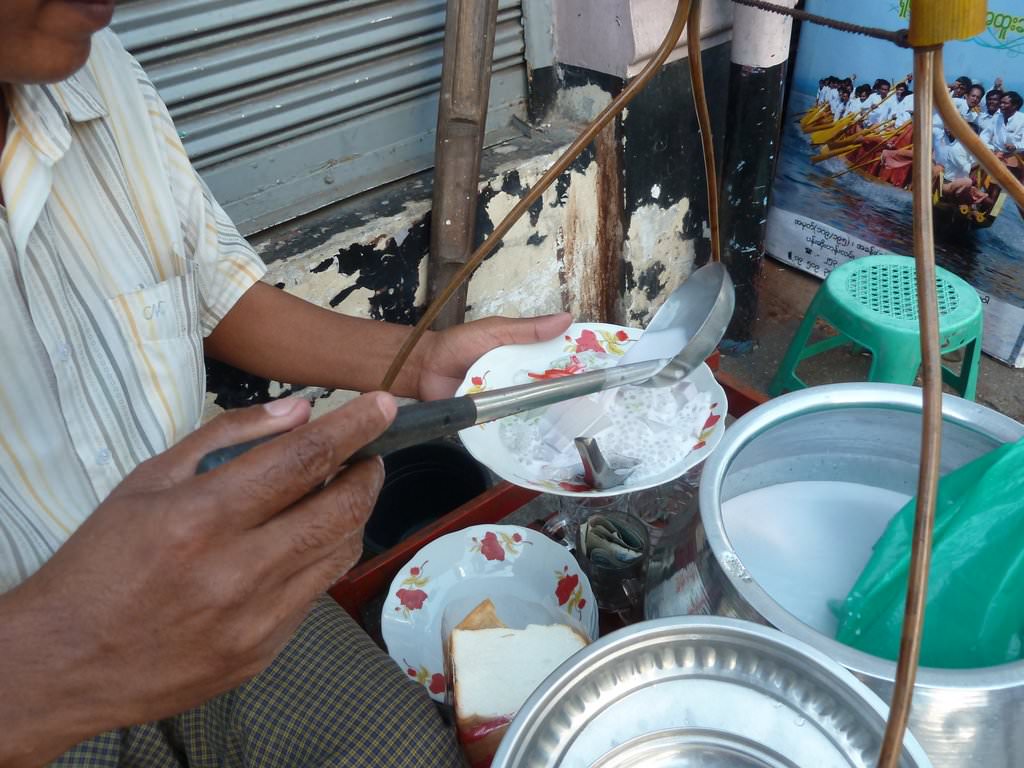
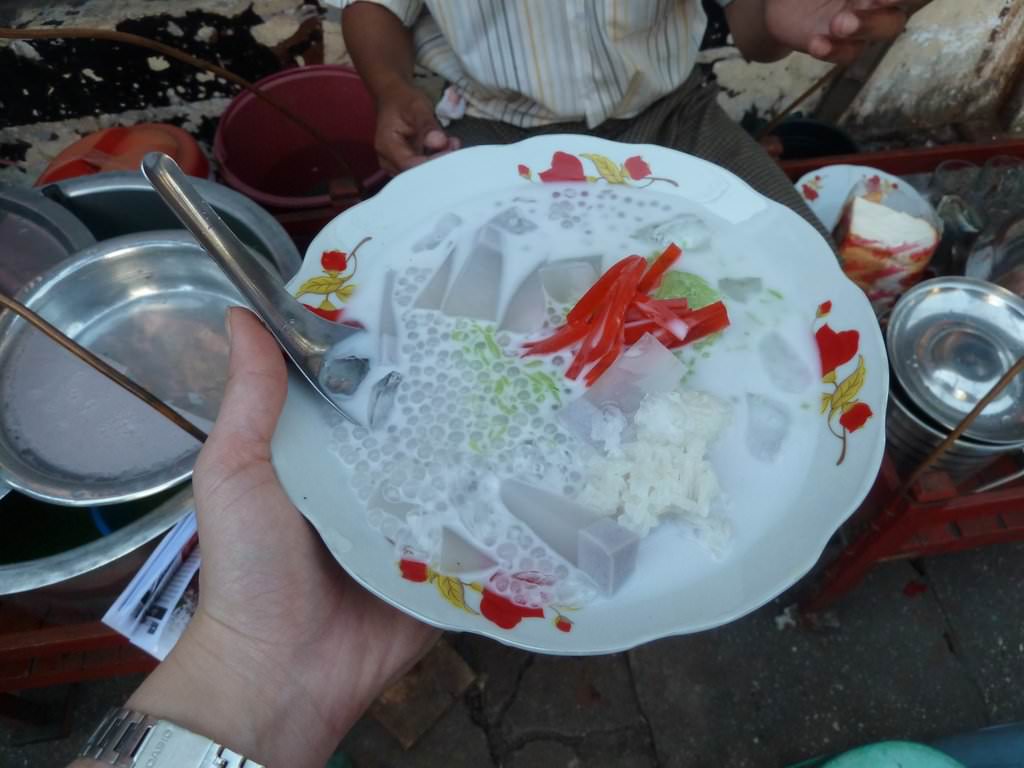
To calm the need for sweets the Burmese are using tapioca and jelly in impressive variations. Tapioca is a kind of a starchy root which becomes a transparent jelly when cooked. Typically using it as a base for pudding and manufacturing colorful small balls which can be added to all sorts of desserts. My favorite dessert is the Flooda. Each Falooda stand has its own flag dish. The guy in the picture is holding his mobile stall with both hands! He begins by placing white bread on a plate, above some green jelly snakes, next to it some sweet sticky rice and then coconut translucent jelly balls, a bit of red jelly stripes, then he cuts rectangles of jelly made from tapioca semi – transparent – semi – purple and above all pours some coconut milk and a bit of sugar syrup. There are no words to describe how satisfying this dish is.
Sweet here and there
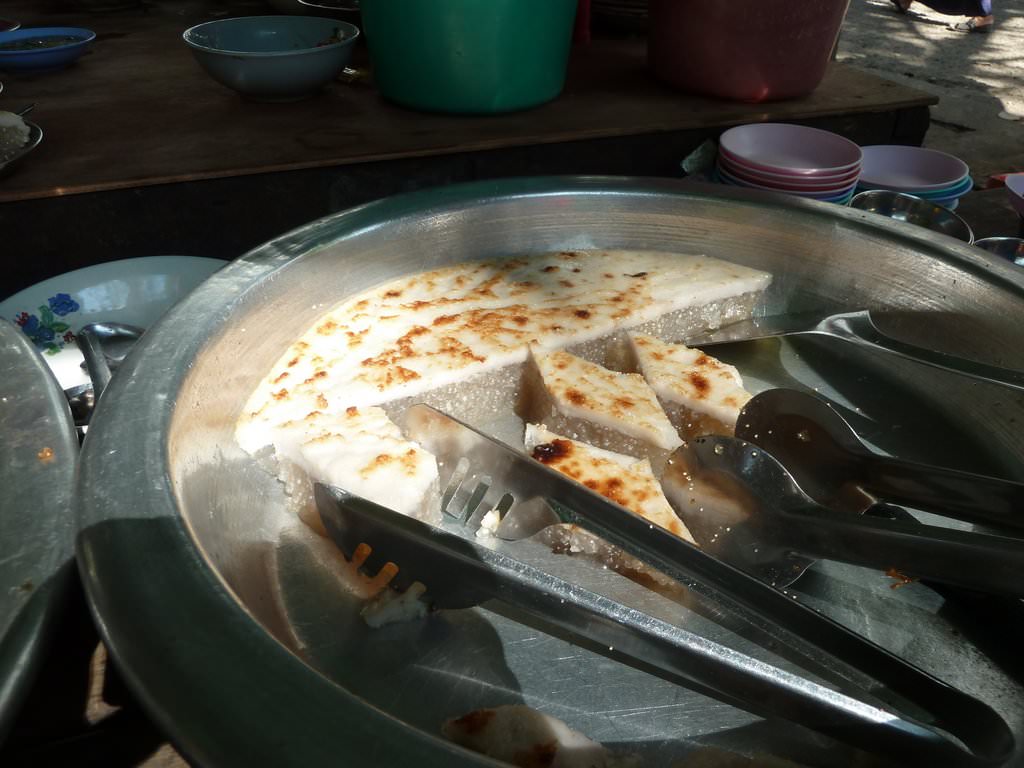
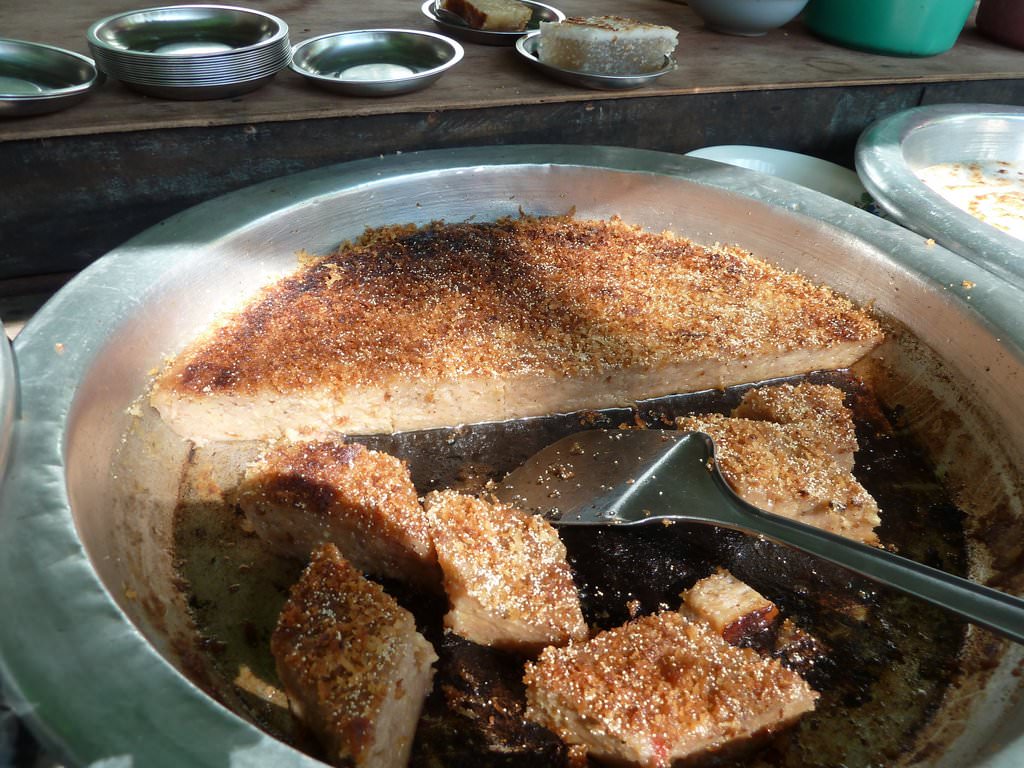
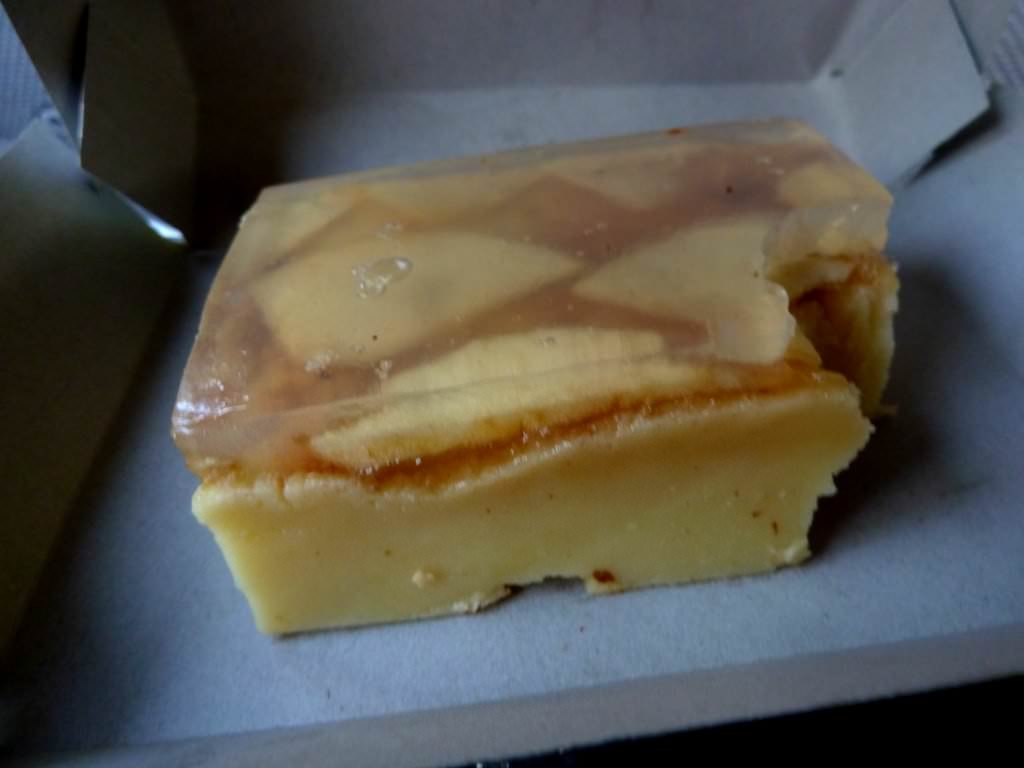
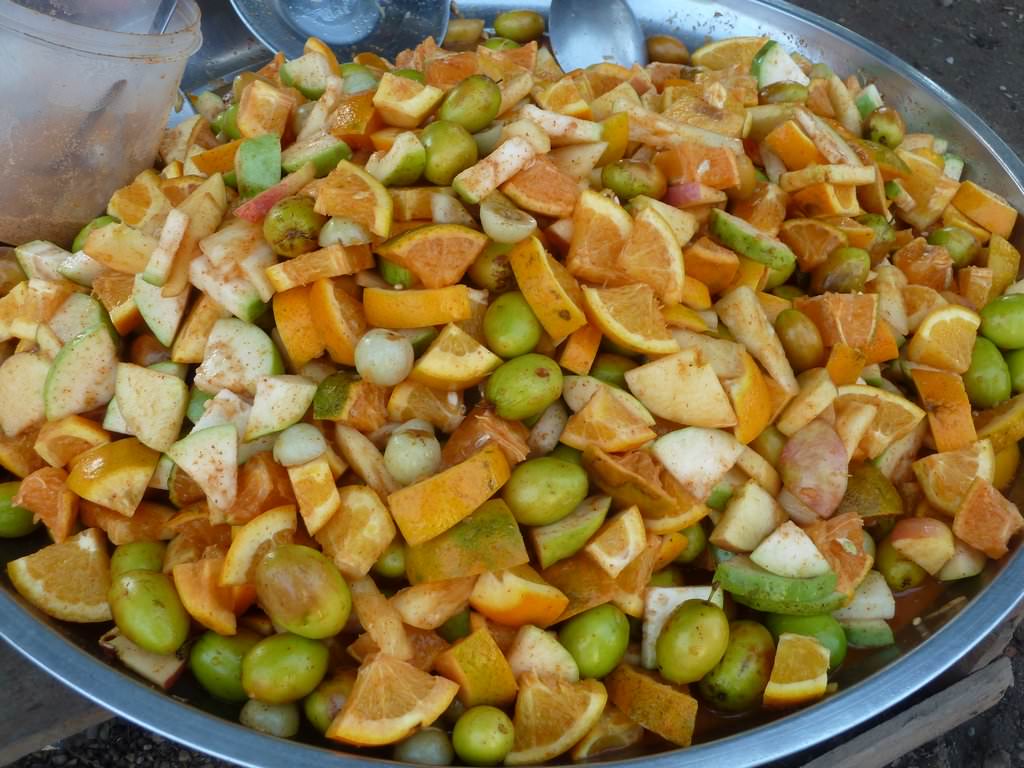
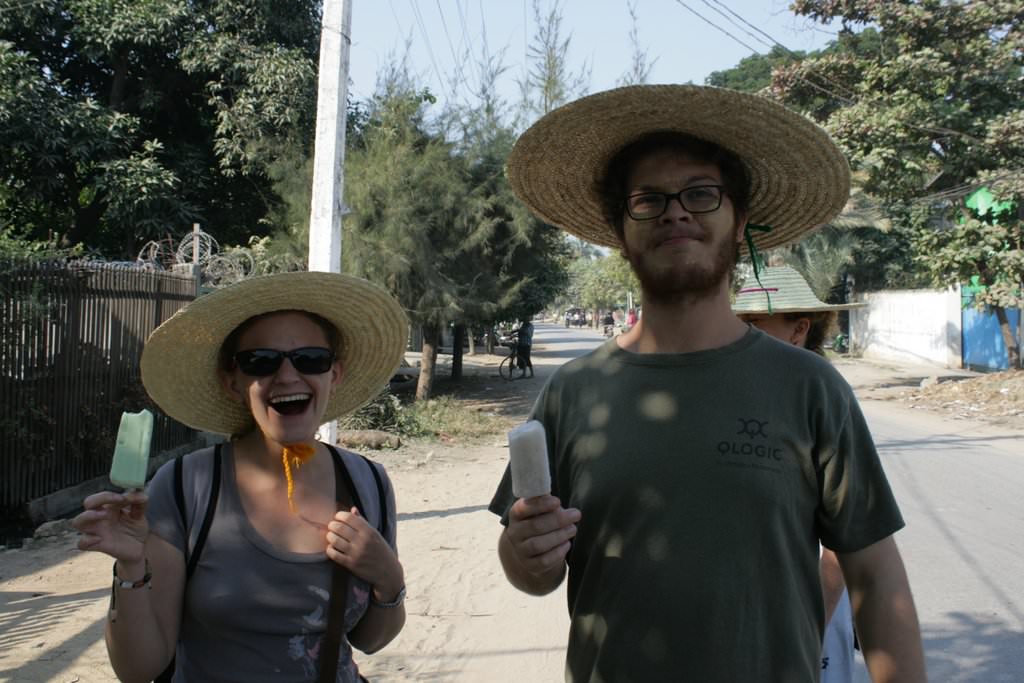
One common and great dessert is a flat and moist cake found in large stainless steel trays and cut to diamonds shapes. The classic type made from tapioca balls at the bottom and a white coconut layer on top. Another common cake is a cake made of bananas and lots of sugar. Sometimes you can find sweet and sticky semolina cakes. On another day you can try to taste a fruit salad with extra chili – very spicy. On weekends children enjoy the ice-cream-bike-man who pass through the neighborhood and sell ice cream with cool flavors.
The Burmese cuisine is like a mirror to an entire culture. It reveals characteristics of oppression, of sadness and poverty but at the same time intertwining moments of optimism, beauty and sweetness.
Additional photo albums from Myanmar: food, street vendors, people and Myanmar.

yumi – let’s do it all again!!!